
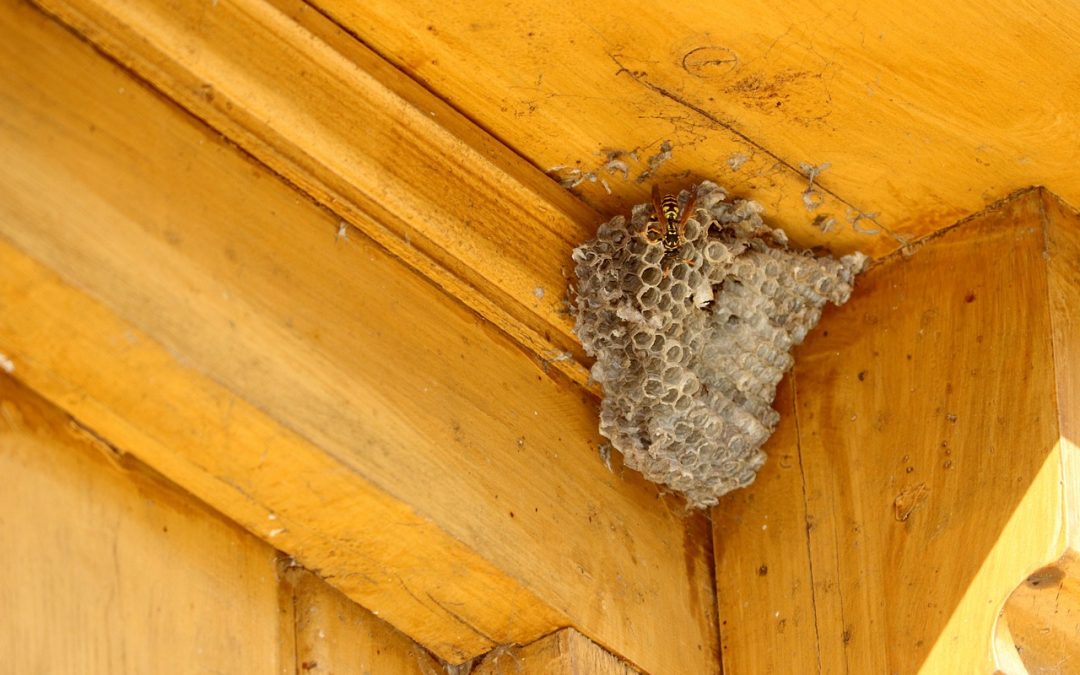
Wasps are useful insects; they pollinate plants and prey on other pests, but a nest on or near your home is a different story. Once a colony settles in your eaves, garden shed, or fence line, it grows fast, and so does the risk. Understanding how to find a wasp nest, what to do when you locate one, and when to call in a professional can save you a painful and potentially dangerous experience.
How to Find a Wasp Nest Around Your Property
Wasp nests are not always obvious, especially in the early season when colonies are small and activity is light. By midsummer, though, a single nest can house hundreds of workers, and knowing how to find a wasp nest early gives you a significant advantage.
The most reliable method is observation. Watch where wasps are flying in a consistent direction, particularly in the early morning or late afternoon when activity peaks. Follow their flight path, and you will often trace it back to the nest. Common locations include:
- Roof eaves, soffits, and wall cavities
- Tree branches, hedges, and dense shrubs
- Sheds, garages, and spaces under decking
- Ground-level holes or gaps in masonry, which often indicate underground species like yellow jackets
Nests are typically gray or tan with a papery, layered texture, the result of wasps chewing wood fiber into a pulp. They range from golf-ball size in spring to basketball size or larger by late summer. Some species, like yellow jackets, build entirely underground and leave no visible structure at the surface, only a hole with consistent wasp traffic coming and going.
What to Do When You Find a Wasp Nest
Knowing what to do when you find a wasp nest starts with one rule: don’t react impulsively. The instinct to swat, spray, or knock the nest down is understandable, but it is also the fastest way to provoke hundreds of stings at once.
If you stumble onto a nest unexpectedly, move away slowly and calmly. Avoid swatting at wasps; rapid movement signals a threat and triggers a defensive response from the colony. Once you are at a safe distance, take note of the nest location, its approximate size, and whether it is in a high-traffic area of your yard or home.
From there, your options depend on the nest’s size, location, and how much risk it poses to people nearby. A small, inactive-looking nest in a low-traffic corner of your yard is a different concern than an active colony tucked into a child’s play structure or a rooftop vent. The larger and more exposed the nest, the more urgently it warrants professional attention.
Can You Remove a Wasp Nest Yourself?
This is where many homeowners get into trouble. Hardware store wasp sprays are widely available, and the idea of a quick DIY fix is appealing. The reality is more complicated.
Most commercial sprays kill wasps on contact, but they don’t reach the queen or eliminate the colony. An agitated colony that has been partially treated is often more aggressive than one that hasn’t been disturbed at all. There is also the practical challenge of application: reaching a nest under a roofline, inside a wall void, or up in a tree puts you in close range of defensive wasps without the protective gear that professionals use.
How to exterminate a wasp nest effectively requires more than a can of spray. It requires correctly identifying the species (different wasps respond to different treatments), treating at the right time of day (early morning or dusk when foragers are inside the nest), and ensuring the queen is eliminated, otherwise the colony rebuilds. Underground nests present additional challenges, as the full extent of the colony may be hidden well below the entry point.
There are situations where a very small, newly established nest in an accessible, low-risk location can be handled by a careful and prepared homeowner. But for any nest that is established, large, or near people, especially children, pets, or anyone with a sting allergy, professional removal is the only genuinely safe approach.
How to Dispose of a Wasp Nest Safely
Once a nest is treated and the colony is no longer active, either through professional service or a confirmed die-off at the end of the season, how to dispose of a wasp nest becomes the next question.
A few important points:
- Wait at least 48 hours after treatment before approaching any nest. Even after the colony is eliminated, individual returning foragers may still be present.
- Wear thick gloves and long sleeves regardless of how certain you are the nest is inactive. Residual protective instinct in surviving wasps can still result in stings.
- Seal the nest in a heavy garbage bag and tie it securely before placing it in an outdoor bin.
- After removal, seal any gaps, cracks, or entry points wasps used to access the structure, or the same site will be colonized again the following season.
If a professional handled the treatment, they will typically handle disposal as part of the service; you should not have to manage this step yourself.
For anyone dealing with an active colony, professional wasp nest removal in Edmonton is the fastest and safest path to resolving the problem. Our technicians identify the species, treat the colony correctly, and handle disposal. Our phones are answered seven days a week, including evenings.
Why Wasp Nests Don’t Go Away on Their Own (Until It’s Too Late)
A common misconception is that wasps naturally abandon their nests, and the problem resolves itself. Technically, this is true, but the timeline matters. Colonies decline in late autumn as worker wasps die off with the cold. However, the newly mated queens from that colony do not die. They overwinter and emerge the following spring to establish new nests, often in the same areas or structures they were born in.
Leaving a nest in place means more queens the following year, and potentially more nests. It is not a self-correcting problem; it is a compounding one.
Frequently Asked Questions About Wasp Nest Removal
How do I know if a wasp nest is active?
Watch for wasps flying in and out of a consistent entry point, particularly during daylight hours. An active nest will have regular traffic. In late autumn, activity drops significantly as the colony declines, but do not assume an inactive-looking nest is safe to approach without confirming it.
Is it safe to remove a wasp nest at night?
Treating a nest at night reduces risk somewhat because foragers return to the nest in the dark, and the colony is less mobile. However, disturbing the nest, even at night, can still provoke a defensive response. It is safer to leave treatment to a professional with the right protective gear, regardless of the time.
What happens if I leave a wasp nest untreated?
The colony will continue to grow through the summer, increasing the number of defensive workers and the risk of stings near the nest. While the colony naturally declines in autumn, the queens it produces will return the following spring to start new nests. Early treatment prevents this cycle.
When to Call a Professional for Wasp Nest Removal
The answer is simpler than most people expect: when the nest is active, accessible to people, and larger than your fist, call a professional. That threshold covers the vast majority of residential wasp problems.
We Clean Pest Control technicians identify the species, treat the colony correctly, and handle disposal, without requiring you to prepare or vacate your home. Our phones are answered seven days a week, including evenings, so you are never left managing an active nest without support.
