
You notice a few unusual trails in your lawn. A shrub that looked healthy last week is suddenly struggling. Maybe there are fresh mounds of dirt appearing near your garden beds.
When damage starts showing up in a yard, many homeowners assume they have a generic rodent problem. In reality, two of the most common culprits are gophers and voles. While both can damage landscapes, gardens, and trees, they behave very differently and leave behind distinct clues.
Knowing which pest is responsible can help you understand the risks to your property and determine the most effective next steps.
What Is the Difference Between a Gopher and a Vole?
Gophers and voles are often confused because both are small mammals that damage vegetation. However, their appearance, habits, and the type of damage they cause are quite different.
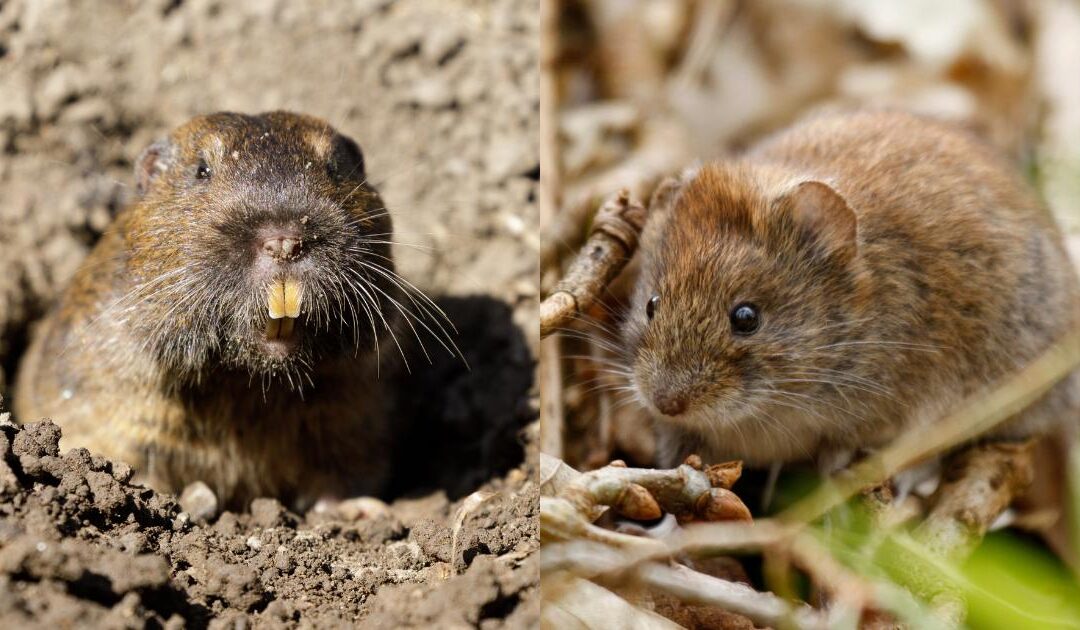
Gophers are larger rodents that spend most of their lives underground. They create extensive tunnel systems and primarily feed on roots, bulbs, and underground plant material.
Voles are much smaller and resemble stocky field mice. Rather than living deep underground, they travel through shallow tunnels and surface runways hidden beneath grass, mulch, or snow cover.
The easiest way to tell them apart is by examining the signs they leave behind.
| Sign | Gophers | Voles |
| Most obvious clue | Fresh soil mounds | Surface runways in grass |
| Tunnel location | Deep underground | Near the surface |
| Main food source | Roots, bulbs, tubers | Roots, bark, stems, grasses |
| Lawn damage | Mounds and sinking soil | Narrow trails through turf |
| Irrigation damage | Common | Uncommon |
| Likelihood of seeing the animal | Very low | Moderate |
How Do I Know If I Have Gophers or Voles?
The answer usually lies in the pattern of damage.
Gophers leave evidence in the soil. Their tunnels push dirt to the surface, creating distinctive crescent-shaped or fan-shaped mounds. Homeowners rarely see the animals themselves because they spend almost all their time underground. Instead, they notice damaged roots, dying plants, and fresh mounds appearing throughout the yard.
Voles leave evidence in the vegetation. They create narrow pathways that look like miniature trails winding through grass or garden beds. These runways often become especially visible after snow melts in spring. Small entrance holes, damaged bark, and chewed plants are also common signs.
If you see trails, think voles. If you see mounds, think gophers.
What Does Vole Damage Look Like?
Vole damage often develops slowly and can be mistaken for other problems.
Many homeowners initially suspect drought, disease, or poor soil conditions when plants begin declining. The real cause may be hidden just below the surface.
Voles feed on roots, bulbs, grasses, and tree bark. During winter, they frequently chew bark around the base of young trees and shrubs while protected beneath snow cover.
By spring, property owners may discover that trees are struggling to leaf out or that ornamental plants have died unexpectedly.
A common warning sign is the appearance of narrow runways crossing lawns. These pathways often connect feeding areas with protective cover such as shrubs, mulch beds, or dense vegetation.
For homeowners researching residential pest control solutions, identifying these runways early can help prevent larger landscaping losses later in the season.
What Does Gopher Damage Look Like?
Gopher damage tends to be more dramatic.
Their powerful digging creates visible soil mounds across lawns, gardens, and landscaped areas. As they expand their tunnel systems, they feed on roots from below, sometimes pulling entire plants underground.
One day a plant appears healthy. A few days later, it may be wilted or completely gone.
Gophers can also create problems beyond landscaping. Their tunnels may damage sprinkler systems, irrigation lines, and other underground infrastructure. Over time, tunnel networks can create uneven ground that becomes difficult to maintain.
Because the damage occurs below the surface, homeowners often underestimate the extent of an infestation until significant losses have already occurred.
Are Voles or Gophers More Destructive?
Neither pest is harmless, but the type of damage differs.
Voles generally affect a larger number of plants because they feed on grasses, roots, stems, bulbs, and bark. Their populations can grow quickly, especially when food and shelter are abundant.
Gophers usually cause more severe damage to individual plants. Since they target root systems directly, they can kill shrubs, vegetables, and young trees surprisingly quickly.
Gophers also pose a greater risk to irrigation systems and underground utilities.
In many cases, the most expensive damage is not immediately visible. A plant may appear healthy while its roots are already being consumed below ground.
Why Are Gophers and Voles Attracted to Certain Properties?
Healthy landscapes often provide everything these rodents need to thrive.
Dense vegetation offers protection from predators. Gardens provide a reliable food source. Irrigated soil is easier to dig and supports lush plant growth.
Properties are especially attractive when grass is allowed to grow tall or when mulch and ground cover create sheltered pathways.
Ironically, well-maintained gardens often attract more activity because they contain abundant roots, bulbs, vegetables, and ornamental plants.
This is why prevention focuses not only on removing existing pests but also on reducing the conditions that encourage them to stay.
Can Gophers and Voles Damage Trees?
Yes, and tree damage is one of the most costly consequences of an infestation.
Voles frequently chew bark near ground level. If enough bark is removed around the trunk, the tree may become girdled, preventing nutrients from moving between the roots and canopy.
Gophers attack from below. By feeding on roots, they weaken the tree’s ability to absorb water and nutrients. Symptoms may include poor growth, yellowing leaves, branch dieback, or sudden decline.
Young trees are particularly vulnerable because their root systems are smaller and less established.
If multiple trees begin showing signs of stress in the same area, underground rodent activity should be considered as a possible cause.
How Can You Prevent Gophers and Voles?
The most effective prevention strategy is making your property less attractive to them.
Keeping grass trimmed, removing excessive vegetation, and regularly inspecting gardens can help detect activity before it becomes widespread. Protective barriers around vulnerable trees and raised garden beds with underground mesh can also reduce the likelihood of damage.
Monitoring is particularly important in spring and fall, when rodent activity often increases.
At We Clean Pest Control, we frequently find that homeowners notice the symptoms long after the rodents have become established. Early detection is often the difference between a minor issue and a costly landscape repair project.
When Should You Call a Professional?
A single runway or isolated mound is not always a reason to panic.
However, repeated signs of activity usually indicate an established population that is actively expanding.
If new mounds continue appearing, plants are dying unexpectedly, or irrigation systems are being damaged, professional inspection may be necessary to determine the extent of the problem.
Many property owners begin searching for a gopher exterminator in Edmonton only after several unsuccessful attempts at controlling the issue themselves. By that point, tunnel systems may already extend across a significant portion of the property.
The earlier the source of the damage is identified, the easier it is to limit long-term consequences.
Frequently Asked Questions
Do voles leave dirt mounds like gophers?
No. Voles typically create shallow runways and small openings hidden in vegetation. Fresh soil mounds are usually associated with gopher activity.
Are gophers active year-round in Alberta?
Yes. Gophers can remain active throughout the year, although signs of activity are often easier to spot during spring and fall.
Can voles damage house foundations?
Voles generally do not damage foundations directly. Their activity primarily affects lawns, gardens, ornamental plants, and young trees.
Will gophers eventually leave on their own?
Sometimes, but there is no guarantee. If food and shelter remain available, gophers may continue expanding their tunnel systems and causing additional damage.
The Fastest Way to Identify the Pest Is to Follow the Damage
When comparing gophers vs voles, the most important clues come from the damage itself.
Visible soil mounds almost always point toward gophers. Surface runways, chewed bark, and narrow trails through grass are more commonly associated with voles.
The sooner you identify which pest is active, the sooner you can protect your lawn, trees, gardens, and landscaping investment. What looks like a small nuisance today can become a much larger problem if underground activity continues unnoticed for months.
