
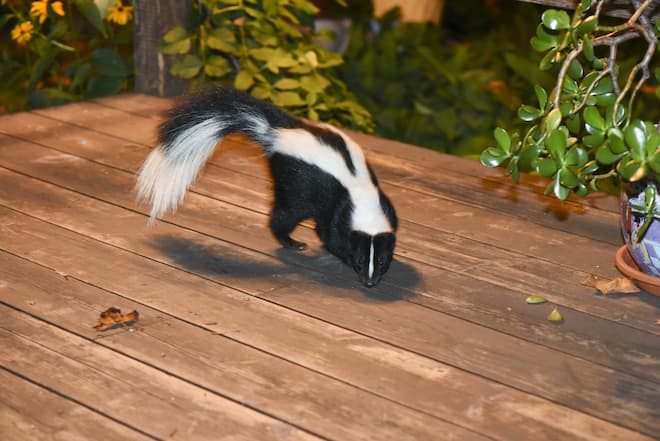
You walk outside one evening and catch a faint musky smell. A few days later, your dog becomes obsessed with a corner of the deck. Then you notice a small hole near the foundation.
These are often the first clues that a skunk may have moved in.
Skunks are common throughout Alberta and frequently take shelter under decks, porches, sheds, and other low-clearance structures. They prefer quiet, protected spaces that keep them safe from predators and harsh weather. Unfortunately, once a skunk establishes a den under your deck, the problem rarely resolves itself.
Knowing what to look for can help you identify skunk activity early and avoid property damage, unpleasant odors, and unwanted encounters.
Why Do Skunks Live Under Decks?
From a skunk’s perspective, a deck is almost the perfect home.
The space underneath provides shelter from rain, snow, wind, and extreme temperatures. It also offers protection from predators and human activity. If there is easy access to food nearby, a skunk may decide to stay for weeks or even months.
Common attractants include:
- Accessible garbage bins
- Fallen fruit from trees
- Bird seed scattered around feeders
- Pet food left outdoors
- Lawns with grubs and insects
- Outdoor water sources
Once a skunk finds both food and shelter in the same area, your property can become an ideal denning location.
What Are the Signs of a Skunk Under Your Deck?
This is one of the most common questions homeowners ask, and fortunately, skunks leave several clear clues behind.
A Strong Musky Odor
Many people assume a skunk only smells after spraying. In reality, areas around active dens often develop a persistent musky odor even when no spray incident has occurred.
The smell may seem stronger in the evening because skunks are nocturnal and become active after sunset.
If you consistently notice skunk-like odors near your deck, porch, or shed, there is a good chance wildlife is living underneath.
Fresh Digging Around the Deck
Skunks are excellent diggers.
They often create entry points by digging small openings along the edge of a structure. These holes are usually shallow and several inches wide, with loose soil pushed outward.
Unlike larger wildlife such as groundhogs, skunk entrances tend to be relatively neat and compact.
Tracks in Soil or Mud
Skunk footprints are surprisingly distinctive.
Their front tracks often resemble tiny human handprints, complete with visible claws. After rain, you may notice tracks near gardens, flower beds, or around the perimeter of your deck.
Lawn Damage
Many homeowners discover skunks before they ever see one.
Skunks feed heavily on grubs, beetles, and insects living beneath the soil. As they search for food, they leave small cone-shaped holes scattered throughout the lawn.
A yard that suddenly develops overnight digging damage may indicate skunk activity nearby.
What Does a Skunk Den Look Like?
Most skunk dens remain hidden from view, but the entrance usually provides several clues.
A typical skunk den under a deck often has:
- A single entrance hole measuring roughly 4 to 6 inches wide
- Freshly disturbed soil nearby
- Flattened vegetation around the opening
- Visible pathways leading toward the structure
- A lingering musky odor
Female skunks may also line their den with grass, leaves, or other soft materials when preparing to raise their young.
Because decks naturally provide insulation and protection, they are especially attractive during spring denning season.
What Time of Year Are Skunks Most Likely to Move Under a Deck?
While skunks can use decks throughout the year, activity typically increases during spring and early summer.
This is when female skunks search for secure locations to raise their babies. A quiet deck with minimal disturbance can seem like the perfect nursery.
During fall and winter, skunks may also use decks for warmth and shelter. Although skunks do not truly hibernate, they become less active during extended cold periods and often remain close to their den.
This seasonal behavior is one reason many residential pest control professionals recommend inspecting decks and sheds before spring arrives.
Will a Skunk Leave on Its Own?
Sometimes. Often, no.
A skunk that is simply passing through may move on after a few days. However, a skunk that has established a den is much more likely to stay.
The chances increase significantly if:
- Food sources are readily available.
- The den provides good protection from weather.
- A female skunk has babies.
- There is little disturbance around the structure.
Waiting for a skunk to leave naturally can allow damage and odors to worsen over time.
What Sounds Do Skunks Make Under a Deck?
Because skunks are primarily active at night, many homeowners hear them before they see them.
Common sounds include:
- Rustling leaves
- Scratching noises
- Slow movement beneath the structure
- Digging sounds near entry points
- Faint squeaking from baby skunks
Unlike raccoons, skunks are generally quiet animals. Loud crashing or heavy footsteps usually point to a different wildlife species.
Can a Skunk Damage Your Property?
Many people underestimate the impact skunks can have on a property.
The digging itself can create issues around deck supports, patios, and landscaping. Repeated burrowing may weaken soil stability around certain structures.
The bigger concern is often the odor. A startled skunk can spray decks, siding, outdoor furniture, vehicles, and even nearby buildings. The smell can linger for weeks and may spread indoors through ventilation systems.
Skunks can also carry fleas, ticks, and parasites that create additional concerns for pets and homeowners.
At We Clean Pest Control, we often find that homeowners initially contact us because of lawn damage or unusual odors, only to discover a skunk den hidden beneath a structure.
Is It Safe to Remove a Skunk Yourself?
DIY skunk removal is riskier than many homeowners realize.
The biggest mistake is sealing an entrance before confirming whether animals are still inside. If babies are present, blocking the den can separate them from their mother and create a much larger problem.
Store-bought repellents also tend to produce mixed results. They may temporarily discourage activity but rarely solve the underlying issue if access points remain available.
Attempting to trap or corner a skunk significantly increases the chance of being sprayed.
For this reason, many homeowners prefer working with a professional skunk exterminator in Edmonton who can properly assess the situation and recommend appropriate exclusion methods.
How Can You Prevent Skunks From Returning?
Prevention is often easier than dealing with an established den.
Several measures can make your property less attractive to skunks:
- Secure garbage containers with tight-fitting lids.
- Remove outdoor pet food after feeding.
- Clean up fallen fruit and bird seed.
- Address grub infestations in lawns.
- Seal gaps around decks and sheds.
- Install exclusion barriers where appropriate.
- Reduce clutter that creates hiding places.
Regular inspections around your property’s perimeter can also help identify potential entry points before wildlife finds them.
How to Tell If the Problem Needs Immediate Attention
Not every wildlife sighting requires urgent action. However, you should investigate quickly if you notice:
- Strong skunk odors occurring repeatedly
- Fresh digging around your deck
- Visible skunk activity during daylight hours
- Signs of baby animals beneath the structure
- Pets showing intense interest in one area of the yard
Early intervention is usually simpler than waiting until a den becomes fully established.
Frequently Asked Questions
How do I know if a skunk is living under my deck?
The most common signs include a musky odor, digging near the deck perimeter, lawn damage, tracks, and nighttime noises coming from underneath the structure.
What attracts skunks to a yard?
Food and shelter are the biggest attractants. Bird seed, pet food, grubs, garbage, water sources, and accessible spaces under decks all increase the likelihood of skunk activity.
Do skunks stay under decks year-round?
They can. Activity is most common during spring and summer, but skunks may continue using decks for shelter during colder months.
Will skunks eventually leave on their own?
Some do, but many remain if the location provides food, safety, and suitable denning conditions. Female skunks with babies are especially likely to stay until the young mature.
Why Early Detection Makes a Difference
A skunk living under your deck may seem like a minor inconvenience at first, but small warning signs can quickly become larger problems. Odors become stronger, digging expands, and the risk of accidental encounters increases.
The good news is that skunks are usually predictable. They leave tracks, create entry holes, damage lawns, and often announce their presence through smell long before homeowners ever see them.
By recognizing these signs early, you can address the issue before it leads to property damage, persistent odors, or an unexpected spray incident in your backyard.
