
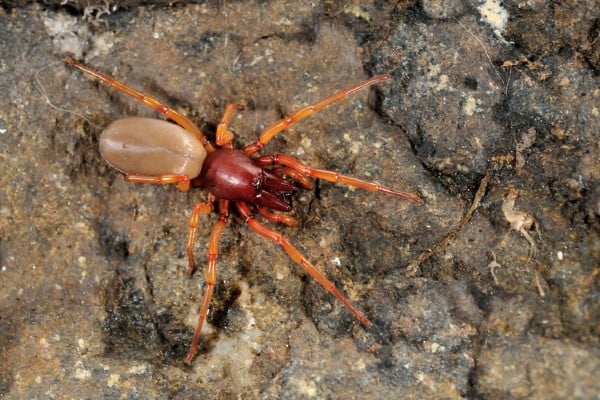
Spotting an unusual spider in your basement or crawlspace can be unsettling, especially when it has a reddish-orange body and a set of fangs that look almost too large for its frame. If that description sounds familiar, you have likely encountered a woodlouse spider. Understanding what this spider is, how it behaves, and whether it poses any risk to your household can help you make a calm and informed decision about what to do next.
What Does a Woodlouse Spider Look Like?
The woodlouse spider (Dysdera crocata) is one of the more distinctive spiders found in Canadian and North American homes. Its appearance makes it easy to identify once you know what to look for.
Unlike most house spiders, which tend to be brown or black, the woodlouse spider has a vivid dark red or orange bodypaired with a pale grayish-white abdomen. Its legs are long and match the reddish tone of its body. Most striking of all are its oversized chelicerae, the fang-like mouthparts at the front of its face. They are noticeably large relative to its body size, which is what gives this spider such an imposing look.
In terms of size, females typically reach about half an inch in body length. Males are smaller, usually just over a quarter inch. Both sexes have six eyes arranged in an oval cluster, which can help differentiate them from the brown recluse, another six-eyed spider, but with a much lighter coloring and a distinctive violin-shaped marking on its back.
Woodlouse Spider Behavior: What It Does and Why It Is in Your Home
The name says it all. This spider hunts woodlice, the small crustaceans most people know as pill bugs, roly-polies, or sowbugs. It does not spin a web to catch prey. Instead, it actively stalks and ambushes, relying on those powerful fangs to pierce the hard outer shell of its targets.
During the day, woodlouse spiders hide. They rest beneath bark, rotting wood, rocks, leaf piles, or mulch. In a home, they tend to move to:
- Damp basements and crawlspaces
- Areas beneath floorboards or around pipes
- Spaces near woodpiles stored indoors
- Cluttered corners with high humidity
The woodlouse spider in house settings is almost always there for one reason: it followed its food source inside. Wherever pill bugs and sowbugs are living, woodlouse spiders are likely not far behind. Homes with moisture issues, poor ventilation, or organic debris near the foundation tend to attract both.
These spiders are most active at night and can live up to three years under the right conditions. They typically appear indoors in late fall as temperatures drop and move back outdoors in spring.
Is a Woodlouse Spider Dangerous?
This is the question most homeowners want answered right away. Is a woodlouse spider dangerous? The short answer is no, not in any serious way.
The woodlouse spider is venomous, but its venom is specifically adapted to affect woodlice, not mammals. For humans, a bite is generally mild. Most people describe it as similar to a mosquito bite: a small amount of localized redness, minor swelling, and brief irritation that fades within a day or two.
Is a woodlouse spider poisonous? This is a common point of confusion. Technically, venom and poison are different things. Woodlouse spiders are venomous (they inject venom through a bite), but that venom is not toxic to humans at the levels they deliver. They are not poisonous in the way that black widows or brown recluses are, and no serious medical complications have been documented from their bites.
How to Get Rid of Woodlouse Spider Infestations
Because woodlouse spiders follow their prey, the most effective long-term solution involves addressing the root conditions that attract both the spiders and the pill bugs they feed on. Here is how to get rid of woodlouse spider activity in and around your home:
- Reduce moisture indoors. Basements and crawlspaces should be well-ventilated. A dehumidifier can make a significant difference in making these areas less hospitable to both spiders and their prey.
- Eliminate outdoor harborage sites. Clear leaf litter, move woodpiles away from your foundation, and remove decaying organic debris. This removes the outdoor habitat that woodlice depend on.
- Seal entry points. Check for gaps around doors, windows, utility lines, and foundation cracks. Caulking these openings cuts off the most common routes inside.
- Fix moisture problems at the source. Leaking pipes, poor drainage, or water intrusion through foundation walls all contribute to the damp conditions these spiders prefer.
If the population is large, persistent, or you simply want the problem resolved quickly and thoroughly, professional spider control in Edmonton is the most reliable path forward.
When Should You Call a Professional?
Most woodlouse spider sightings are isolated and manageable on your own. But there are situations where professional help makes clear sense:
- You are seeing multiple spiders regularly, particularly during warmer months when they should be outside
- You have found them in living areas rather than just the basement or crawlspace
- You have tried prevention steps and the problem continues
- You are unsure whether what you are seeing is a woodlouse spider or something more concerning
The team at We Clean Pest Control identifies the pest and confirms the actual problem before any treatment is recommended or billed. If what you have is a manageable woodlouse spider situation, you will be told that honestly, along with practical guidance to address it.
Frequently Asked Questions
Can a woodlouse spider hurt my pet?
Woodlouse spider venom is not considered harmful to cats or dogs in normal circumstances. A bite might cause brief irritation, but serious reactions in pets are not documented. Still, if your pet seems distressed after contact with any spider, consult a veterinarian.
Is a woodlouse spider poisonous to children?
No more so than to adults. The bite may cause temporary local irritation, but woodlouse spiders are not known to produce venom that poses a health risk to children. Monitor the bite site and seek medical advice if there is any unusual reaction.
How do I know if I have a woodlouse spider or a brown recluse?
The coloring is your fastest clue. Woodlouse spiders are reddish-orange with a pale abdomen and very prominent fangs. Brown recluses are tan to light brown with a violin-shaped mark on the back and a more slender build. Both have six eyes, but their overall appearance is quite different once you know what\\ to look for.
Do woodlouse spiders make webs?
No. Unlike most common house spiders, woodlouse hunters do not build webs. They are active nocturnal hunters that stalk and ambush prey directly. If you are seeing spider webs around your home, they belong to a different species.
Finding a woodlouse spider in your house is rarely a cause for alarm, but it is a signal worth paying attention to. These spiders do not appear randomly, they follow their food source, and their presence often points to moisture conditions or pest populations that are worth addressing. Whether you handle it yourself or bring in spider control in Edmonton, the goal is the same: understanding what you are dealing with and taking practical steps to keep your home comfortable and pest-free.
