
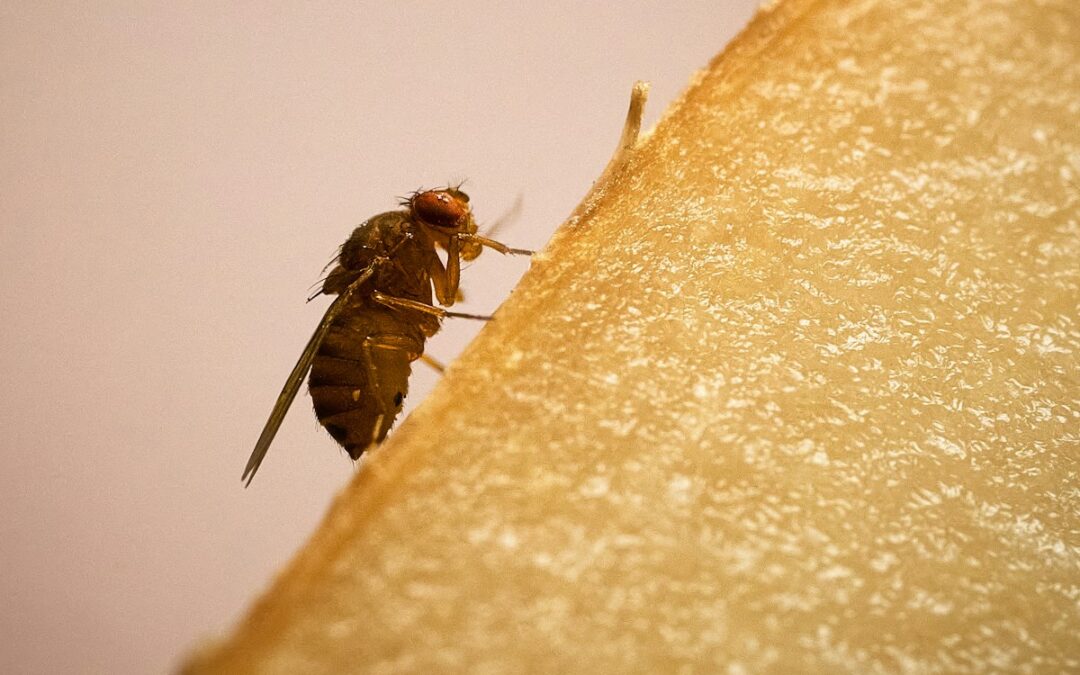
Fruit flies are tiny, but an infestation can appear almost overnight.
You may notice a few hovering around a fruit bowl, sink, garbage bin, or recycling container. Then suddenly there seem to be dozens. That happens because fruit flies can reproduce quickly when they find moist, fermenting organic material.
The good news is that prevention is usually straightforward once you understand what is attracting them. The key is not simply killing the adult flies. It is finding and removing the places where they feed and reproduce.
What Attracts Fruit Flies to Your Home or Business?
Fruit flies are attracted to ripe, overripe, fermenting, or decaying organic material. This includes more than fruit.
A forgotten banana can be enough to start the problem, but so can a small amount of spilled juice, wine, beer, sugary liquid, or food residue. University of Maryland Extension also identifies vinegar and fermenting foods as common attractants.
Moisture makes these conditions even more suitable. Fruit flies can develop in damp organic material, which means a seemingly clean kitchen can still have a hidden breeding site.
Common sources include:
- Overripe fruit and vegetables
- Food or drink spills
- Garbage and compost
- Sticky recycling containers
- Damp cloths, mops, or towels
- Organic buildup inside drains
- Spilled liquids underneath appliances
In commercial settings, the same problem can develop around bar areas, produce displays, kitchens, beverage stations, floor drains, and waste-storage areas.
How To Prevent Fruit Flies in Your Kitchen
The best prevention strategy is to make your home a poor place for fruit flies to feed and reproduce.
Start with produce. Inspect fruits and vegetables when you bring them home, especially items that are already soft or damaged. Wash produce and refrigerate items that do not need to remain on the counter.
Cornell University’s Integrated Pest Management program notes that fruit flies can enter homes on produce as eggs or larvae, making proper produce storage an important part of prevention.
Pay attention to less obvious food sources, too. Check behind appliances and inside cupboards where potatoes, onions, or other produce may have been forgotten.
Keep countertops and sinks free of sticky residue, and clean spills as soon as they happen.
Can Fruit Flies Come From the Drain?
Yes, but there is an important distinction.
Fruit flies and drain flies are different pests, and small flies around a sink do not automatically mean that fruit flies are breeding inside the drain. Drain flies are associated with the organic film that builds up inside drains, while fruit flies are more commonly associated with fermenting fruit and other organic material.
However, fruit flies can also use drains and garbage disposals when suitable organic material is present.
If you keep seeing tiny flies around a sink, investigate the drain rather than assuming the fruit bowl is responsible. A simple way to test a suspicious drain is to cover it overnight and check whether flies appear around it the next morning.
If organic buildup is present, cleaning the drain and removing that material is more important than simply killing the adults.
Does a Fruit Fly Trap Actually Work?
Yes, but it depends on what you expect it to do.
A homemade or commercial fruit fly trap can catch adult flies and reduce the number flying around your kitchen or business. It can be particularly useful after you have removed the main food and breeding sources.
What it cannot do is remove eggs and larvae hidden somewhere else.
For that reason, putting out several traps while leaving a bowl of rotting produce, a dirty recycling bin, or organic buildup in a drain untouched is unlikely to solve the infestation.
Think of the trap as the final step after source removal rather than the first step.
How Can Businesses Prevent Fruit Flies?
Commercial properties have more potential breeding sites because food, drinks, waste, cleaning equipment, and drains may all be used throughout the day.
A strong prevention routine should focus on the places employees may overlook.
For food-service and other businesses, pay particular attention to:
- Produce and food storage: Remove spoiled food promptly and keep susceptible foods properly stored.
- Waste and recycling: Empty bins frequently and rinse containers before recycling them.
- Drains and floor areas: Clean drains regularly and prevent food residue from accumulating around sinks and equipment.
- Cleaning equipment: Do not leave mops, cloths, or other damp materials saturated with food residue.
- Hidden spills: Check beneath equipment, shelving, counters, and appliances where liquids can remain unnoticed.
The goal is not to make every surface sterile. It is to eliminate the combination of moisture plus fermenting organic material that allows fruit flies to reproduce.
For businesses dealing with recurring fly activity, professional commercial pest control can also help identify breeding locations that routine cleaning may miss.
When Should You Call a Professional?
A few fruit flies after leaving fruit on the counter do not necessarily require professional treatment.
The situation is different when the flies keep returning despite thorough cleaning, appear throughout several rooms, or are concentrated around drains, food-service areas, or other difficult-to-access locations.
Recurring activity can indicate a hidden breeding source that has not been found.
At We Clean Pest Control, we believe the first step should be identifying the actual pest problem rather than automatically recommending the most expensive treatment. Our approach is based on honest advice and finding the most appropriate solution for the situation.
If you are dealing with persistent fly activity at home, you can learn more about residential pest control and the types of problems we help Edmonton-area homeowners address.
Frequently Asked Questions About Fruit Flies
How Do Fruit Flies Get Into the House?
Fruit flies can enter through doors and windows, but they can also arrive on produce. Eggs or larvae may already be present on fruits and vegetables before they are brought indoors.
How Long Does It Take To Get Rid of Fruit Flies?
It depends on whether the breeding source has been completely removed. Fruit flies can develop rapidly under favourable conditions, so new adults may continue appearing for several days even after the original source is removed. Cornell notes that the life cycle can be completed in about 10 days under optimum conditions.
What Is the Best Way To Prevent Fruit Flies?
The most reliable approach is consistent sanitation: inspect produce, remove spoiled food, clean spills, manage garbage and recycling, maintain drains, and eliminate damp organic material. Prevention works best when potential breeding sites are removed before flies can establish themselves.
Are Fruit Flies and Drain Flies the Same Thing?
No. They are different insects with different typical breeding habits. Fruit flies are commonly associated with ripe or fermenting food, while drain flies develop in organic buildup inside drains and similar wet areas. Correct identification matters because the treatment needs to target the actual breeding source.
Keep Fruit Flies From Becoming a Recurring Problem
Fruit flies are rarely solved by killing the flies you can see.
The more useful question is: where are they reproducing?
Check the produce, garbage, recycling, drains, appliances, spills, and damp cleaning materials around the property. Remove the source, clean the affected area, and use traps to reduce the remaining adults.
If fruit flies continue appearing after those steps, there may be a hidden breeding site that needs a closer inspection. That is when getting the problem properly identified can save you from repeatedly treating the symptoms without fixing the cause.
For help with persistent fly problems in Edmonton, contact We Clean Pest Control to discuss the situation and find an appropriate solution.
