
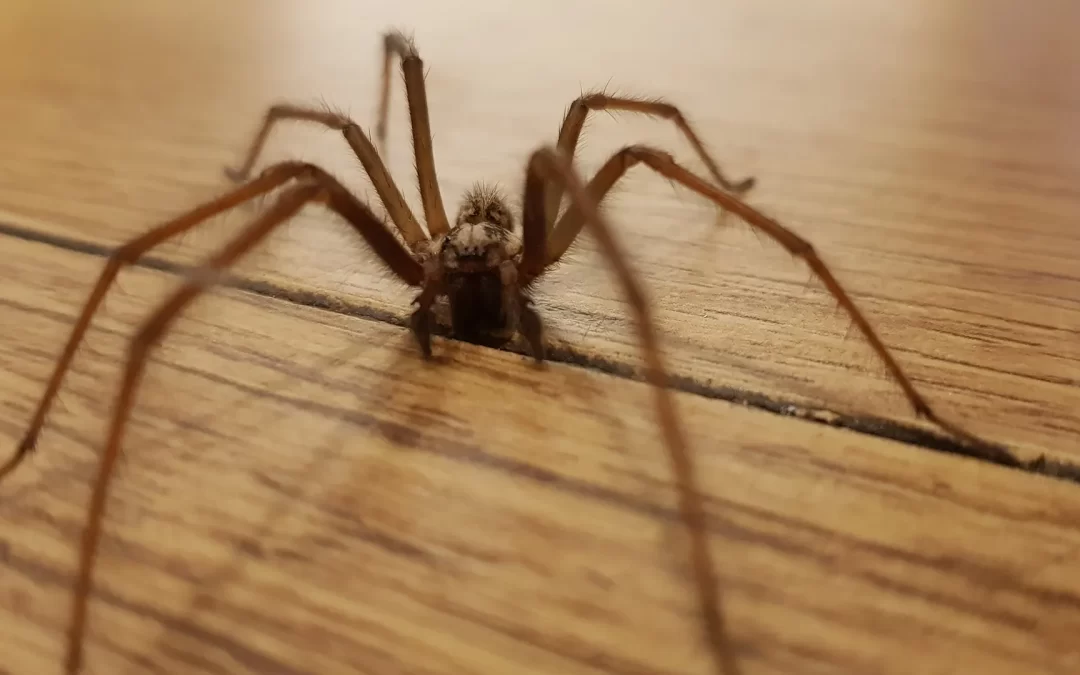
Seeing a spider in your home once in a while is normal. Finding webs in several rooms, spiders around windows, or egg sacs in dark corners is different.
In Edmonton, spiders often move indoors when they find food, shelter, moisture, or warmer conditions. The good news is that you usually do not need to eliminate every spider outdoors. The more effective approach is to make your home less attractive to them and remove the conditions that allow them to stay.
If you are wondering how to get rid of spiders in the house, start by looking for what is attracting them in the first place.
What Attracts Spiders to Your Home?
Spiders do not usually enter a house because they are interested in people. They are looking for the same basic things most pests need: food, shelter, and suitable conditions.
The biggest attraction is often other insects. If flies, mosquitoes, ants, moths, or other small insects are regularly getting inside, spiders have a reason to stay.
Other factors include:
- Insects gathering around windows and outdoor lights
- Cracks and gaps around doors, windows, and the foundation
- Cluttered or undisturbed storage areas
- Moisture in basements, bathrooms, or crawl spaces
- Outdoor vegetation touching the house
- Firewood, boxes, or other materials stored close to the building
This means that simply killing visible spiders may not solve the problem. If the food source remains, new spiders can continue to appear.
Where Do Spiders Hide Inside the House?
Spiders prefer places where they will not be disturbed and where prey is available. You are therefore more likely to find them in quiet areas than in the middle of a busy room.
Common hiding spots include basements, attics, closets, garages, storage rooms, and spaces behind furniture. They may also build webs around windows, doors, light fixtures, and other areas where insects gather.
Look particularly closely at areas that are rarely cleaned or moved.
Egg sacs are another important sign. A spider egg sac can contain many eggs, so finding several sacs suggests that spiders are reproducing inside the home rather than simply wandering in from outdoors.
If you are trying to figure out how to get rid of spiders inside the house, finding these locations is more useful than simply counting the spiders you see.
How Can I Get Rid of Spiders at Home?
For a minor spider problem, start with physical removal and housekeeping. You want to remove both the spiders and the places where they can comfortably remain.
Vacuum webs, spiders, and egg sacs from corners, ceilings, baseboards, closets, and underneath furniture. Empty the vacuum afterward, particularly if you have removed egg sacs.
Reduce clutter in basements, garages, and storage areas. Cardboard boxes and piles of undisturbed belongings can provide hiding places.
It also helps to:
- Seal entry points. Check gaps around windows, doors, utility lines, and the foundation.
- Repair screens. Damaged screens give insects and spiders an easy way inside.
- Reduce indoor moisture. Address leaks and consider a dehumidifier in persistently damp areas.
- Reduce insect activity. Keep food sealed, clean crumbs promptly, and address other pest problems.
- Clean regularly. Vacuum corners, baseboards, and areas underneath furniture where webs and insects accumulate.
These steps are especially useful when only a few spiders are present.
Are Spiders Dangerous in Edmonton Homes?
Most spiders commonly encountered in Edmonton homes are not considered a serious threat to people.
Spiders generally avoid humans and do not seek to bite. Bites can happen when a spider is accidentally trapped against skin or otherwise threatened, but seeing a spider does not automatically mean there is a dangerous infestation.
Still, identification matters if you are seeing an unfamiliar spider or a large number of them.
More importantly for homeowners, a sudden increase in spiders can indicate that there is a larger insect problem providing them with food. In that situation, treating only the spiders may miss the reason they are there.
Why Do I Suddenly Have So Many Spiders?
A sudden increase usually has an explanation.
You may have more insects indoors, a new entry point, increased moisture, or an area that has remained undisturbed long enough for spiders to establish themselves.
Seasonal changes can also affect activity. Spiders may move indoors when outdoor conditions become less suitable, while insects inside the home can provide a steady food source.
If you suddenly notice spiders in several rooms, look for the pattern. Are they concentrated around basement windows? Are webs appearing near exterior doors? Are insects also present?
The answer can help identify the source rather than treating the visible spiders individually.
Should You Use Spider Spray?
Insecticides can kill spiders that are directly exposed to them, but spraying every visible spider is not necessarily the best long-term strategy.
Spiders spend much of their time in cracks, corners, behind objects, and other areas that a surface spray may not reach. Some products may also leave residues that require specific safety precautions around people and pets.
If you use any pesticide yourself, follow the product label carefully and use it only for the purpose and locations specified.
For a persistent infestation, identifying the entry points and food source is usually more useful than repeatedly spraying individual spiders.
If spiders continue appearing despite cleaning and exclusion efforts, professional spider control in Edmonton can help identify where the activity is coming from and determine whether another pest is contributing to the problem.
When Should You Call a Professional?
A few spiders do not necessarily require professional treatment. You may want help when sightings become frequent, webs and egg sacs keep appearing, or spiders are showing up throughout the house.
Professional inspection can also make sense when you cannot determine what is attracting them.
At We Clean Pest Control, the goal is to identify and confirm the actual pest problem before recommending treatment. The company emphasizes recommending the most appropriate and economical option rather than automatically choosing the most expensive service.
For homeowners dealing with recurring pest activity, residential pest control in Edmonton can address the underlying issue rather than focusing only on the spiders you happen to see.
Frequently Asked Questions About Getting Rid of Spiders
What Are Spiders Attracted To?
Spiders are primarily attracted to places where they can find prey and shelter. In a house, that often means areas with other insects, clutter, moisture, cracks, and undisturbed corners.
How Do I Get Rid of Spiders in the House Naturally?
Start with non-chemical measures such as vacuuming webs and egg sacs, reducing clutter, sealing cracks, repairing screens, controlling moisture, and reducing insects around the home. These steps address the conditions that allow spiders to remain.
How Do I Get Rid of Spiders Inside the House Fast?
For a small number of spiders, vacuuming them and removing their webs and egg sacs is the fastest immediate solution. If spiders keep returning, you need to identify and address the reason they are entering or staying inside.
Why Do I Keep Finding Spiders in My House?
Recurring spiders usually mean that at least one of their needs is still being met. There may be an accessible entry point, plenty of insects to eat, moisture, or an undisturbed area where spiders can reproduce.
Stop Treating the Spider and Find the Source
If you want to know how to get rid of spiders at home, focus less on killing individual spiders and more on why they are there.
Seal the openings they use to enter. Reduce insects that provide their food. Keep damp and cluttered areas under control, and regularly remove webs and egg sacs.
That combination is much more likely to reduce recurring spider activity than spraying every spider you find.
If the problem keeps coming back or you are finding spiders throughout the house, We Clean Pest Control can help identify the underlying pest issue and recommend an appropriate solution. The company serves Edmonton and surrounding communities and focuses on practical, proportionate pest control rather than unnecessary treatment.
