
A few fresh dirt mounds can quickly turn into a frustrating lawn problem. Gophers work mostly underground, so you may never get a good look at the animal causing the damage. Instead, you notice disturbed soil, dying plants, damaged roots, or new mounds appearing almost overnight.
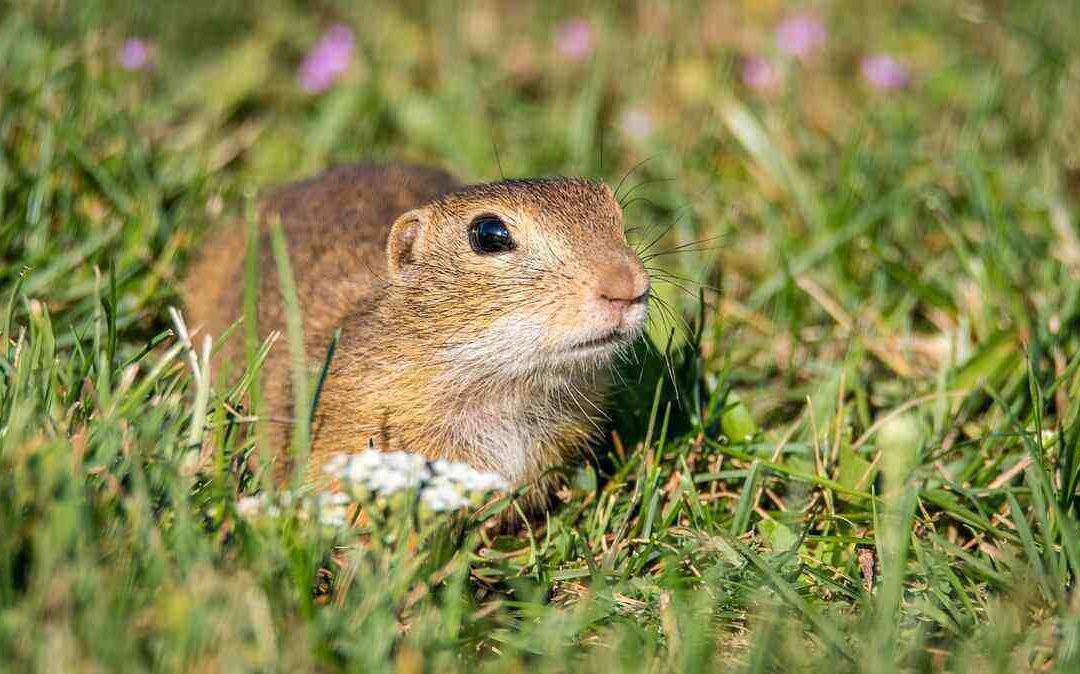
Before choosing a removal method, it is important to identify what you actually have. In Alberta, “gopher” can refer to different burrowing rodents. Northern pocket gophers are true pocket gophers, while Richardson’s ground squirrels are also commonly called gophers. Their behaviour and control methods are not the same.
For Edmonton homeowners, the first step is therefore not putting something down a hole. It is identifying the animal and confirming that the activity is still active.
What Do Gopher Mounds Look Like?
Fresh mounds are usually the easiest sign to spot.
Northern pocket gophers spend almost their entire lives underground and push soil to the surface as they excavate their tunnels. Alberta notes that fresh soil mounds are one of the main ways to identify an active pocket gopher infestation.
You may also notice:
- New mounds appearing in different areas of the lawn
- Wilting or dying plants despite adequate watering
- Damaged roots, bulbs, or vegetables
- Raised or collapsing sections of soil
- Damage to shallow irrigation lines or other underground infrastructure
A single mound does not necessarily tell you how extensive the tunnel system is. Pocket gophers are solitary and can maintain individual underground burrow systems.
How Do I Know If I Have Gophers or Another Burrowing Pest?
Not every mound or hole in a lawn means you have gophers.
Gophers primarily feed on vegetation and roots, while other burrowing animals may leave very different signs. Identifying the pest before treatment matters because a control method designed for one species may do little against another.
If you are seeing fresh mounds but rarely see an animal, that is consistent with northern pocket gopher activity. Richardson’s ground squirrels, on the other hand, are commonly seen above ground and are a different species requiring different management.
This distinction is especially useful when researching how to get rid of gophers in Edmonton, because local terminology can make online advice confusing.
How to Get Rid of Gophers in Your Yard
Once you have confirmed active gopher activity, the most reliable approach is targeted control rather than trying random household remedies.
Alberta’s guidance recommends an integrated approach that combines monitoring, habitat management, and targeted control. For northern pocket gophers, trapping is identified as one of the most effective options for small or localized infestations.
For a homeowner, the process generally looks like this:
- Find the freshest activity. New mounds indicate that the tunnel system is currently being used.
- Locate the main tunnel. Pocket gophers travel through established underground runways rather than simply moving from hole to hole on the surface.
- Use an appropriate control method. Properly positioned traps can target the active tunnel directly.
- Monitor afterward. New mounds are a useful indicator that gopher activity is continuing.
The location of the control method matters. Alberta recommends placing traps in the main tunnel rather than in shallow surface runs and monitoring the area afterward.
Do Gopher Repellents Actually Work?
Repellents are one of the most tempting options because they seem easier than locating an underground tunnel.
Unfortunately, they are not a dependable solution for an established infestation. Strong scents, ultrasonic devices, vibrating stakes, and similar products are frequently marketed as ways to make gophers leave, but results can be inconsistent.
The bigger problem is that even if a gopher avoids one part of the yard, it may simply tunnel somewhere else.
For that reason, prevention and exclusion can be more useful as supporting measures than as a standalone solution. Alberta recommends maintaining vegetation, avoiding excessive irrigation, and regularly checking for new mound formation as part of long-term pocket gopher management.
What Damage Can Gophers Cause?
Gopher damage is not limited to an unattractive lawn.
Because pocket gophers feed underground, they can damage plant roots before you realize what is happening. Trees, shrubs, ornamental plants, vegetables, and grasses can all be affected. Their tunnels can also disturb soil and interfere with irrigation systems or shallow underground infrastructure.
In a residential yard, the damage may show up as:
| Sign | What It Can Mean |
| Fresh soil mounds | Active tunnelling |
| Wilting plants | Root damage |
| Uneven ground | Extensive underground activity |
| Damaged irrigation | Tunnels intersecting shallow systems |
| Repeated new mounds | Control has not eliminated the active animal |
The earlier you respond to repeated activity, the easier it is to identify where the problem is concentrated.
Is It Possible to Get Rid of Gophers Permanently?
Not necessarily.
Gopher control is often a matter of management rather than a one-time permanent fix. Alberta specifically notes that complete elimination of northern pocket gophers is uncommon and that ongoing monitoring may be needed.
This makes sense when you consider how these animals live. Even if you remove the gopher currently damaging your yard, another animal can eventually move into suitable habitat.
The practical goal is to eliminate active animals, protect vulnerable areas, and catch new activity early.
If the problem keeps returning, residential pest control can be useful when you need help determining whether you are dealing with an isolated animal or an ongoing property issue.
When Should I Call a Professional for Gophers?
Professional help makes sense when new mounds continue appearing despite your efforts, the infestation is spread across the property, or you cannot confidently identify the animal.
It is also worth getting help when gophers are damaging irrigation, landscaping, gardens, or other parts of the property.
We Clean Pest Control takes an identification-first approach. The goal is to confirm the actual pest problem before recommending treatment, rather than automatically choosing the most expensive option.
For Edmonton homeowners looking for help with how to get rid of gophers, a targeted assessment can determine where the activity is concentrated and what control approach makes sense for the property.
Frequently Asked Questions About Gophers
What Attracts Gophers to My Yard?
Food and suitable underground habitat are major factors. Pocket gophers feed on roots and vegetation and can occupy lawns, gardens, and other areas where food and workable soil are available.
How Deep Do Gophers Dig?
Northern pocket gophers create underground tunnel systems rather than staying close to the surface. Because most of their activity happens underground, fresh mounds are generally more useful for locating active areas than trying to spot the animal itself.
Do Gophers Hibernate in Alberta?
Northern pocket gophers remain underground and active through their burrow systems rather than simply disappearing for the winter. Richardson’s ground squirrels are a separate species with different seasonal behaviour, which is another reason correct identification matters.
What Is the Most Effective Way to Get Rid of Gophers?
For northern pocket gophers, Alberta identifies properly placed trapping as one of the most effective methods for small or localized infestations. Larger or persistent problems may require a broader control strategy and ongoing monitoring.
Get Your Yard Back Before the Mounds Multiply
If you are searching how to get rid of gophers in my yard, start with the evidence under your feet. Fresh mounds, plant damage, and repeated new activity can tell you far more than a shelf of untested repellents.
The most effective solution depends on identifying the animal, locating active tunnels, using an appropriate control method, and monitoring afterward. Prevention can then help protect gardens and landscaping from future damage.
If the mounds keep appearing and you cannot get ahead of the problem, We Clean Pest Control can help identify the pest and determine an appropriate next step. The focus is always on solving the actual problem without recommending treatment you do not need.
