
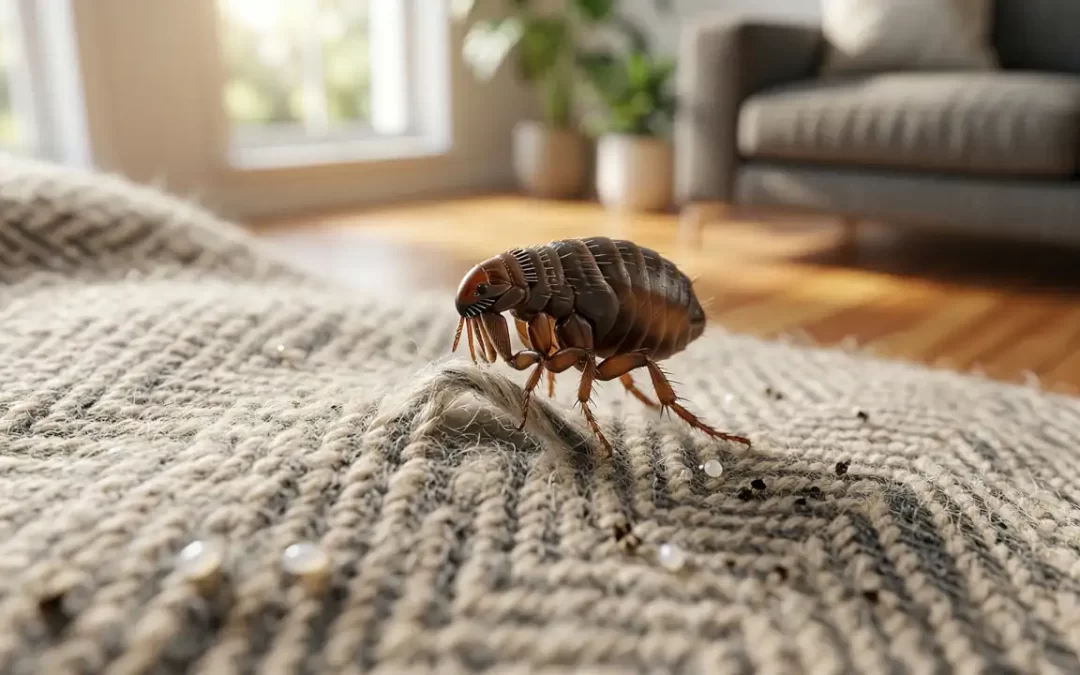
Finding fleas in your home can be frustrating, especially when you keep seeing new ones after cleaning or treating your pet. The reason is simple: adult fleas are only one part of the problem.
Flea eggs, larvae, and pupae can remain hidden in carpets, pet bedding, upholstery, floor cracks, and other areas where pets spend time. A treatment that kills only the adult fleas may leave the next generation behind.
So, how to exterminate fleas in house effectively? You need to treat the source, the environment, and the flea life cycle rather than relying on one product or one cleaning session.
How Do You Know If You Have Fleas in Your House?
Fleas are small and fast, so you may notice their effects before you see the insects themselves.
Common signs include:
- Pets scratching, biting, or grooming themselves more than usual
- Small black specks, known as flea dirt, on pet bedding or fur
- Small, itchy bites, often around the ankles and lower legs
- Fleas jumping on pets, carpets, furniture, or clothing
Flea dirt can be especially useful when confirming an infestation. It can look like coarse black pepper and is often found where an infested pet sleeps or rests.
If you do see fleas, do not assume that the visible adults represent the entire infestation. Much of the flea population can be hidden in the environment.
How To Get Rid of Fleas in the House?
The most effective approach combines cleaning, pet treatment, and environmental control.
Start by identifying where the fleas are coming from. Pets are a common source, but fleas can also enter with wildlife or animals living around or inside a property. Cornell University recommends finding the source before treating the infestation because an untreated host can continually reintroduce fleas into the home.
For an active infestation, focus on these areas:
- Treat pets with veterinary guidance. Use a flea-control product appropriate for the animal, age, and health of your pet. Pest control professionals should not choose or apply medications for pets.
- Vacuum thoroughly. Focus on carpets, rugs, upholstered furniture, cracks, baseboards, and areas where pets rest. Dispose of vacuum contents carefully so surviving fleas cannot escape.
- Wash pet bedding and fabrics. Wash bedding, blankets, and other washable items regularly using the hottest setting that is appropriate for the material.
- Repeat the process. Flea pupae can remain protected in cocoons and emerge later when they detect movement or other signs of a host.
This is why one afternoon of cleaning rarely solves an established infestation.
What Actually Kills Fleas in the House?
There is no single method that reliably eliminates every flea life stage.
Vacuuming physically removes fleas and immature stages. Washing and drying fabrics with appropriate heat can kill fleas and eggs on those items. Steam can also kill fleas in carpets and upholstery when the treatment reaches the affected areas.
For more established infestations, professional or labelled indoor flea treatments may use a combination of an adulticide and an insect growth regulator (IGR). Adulticides target existing fleas, while IGRs interfere with the development of immature fleas and help break the reproductive cycle.
The important distinction is that killing the fleas you can see is not the same as eliminating the infestation.
How Can I Get Rid of Fleas in My House Without Treating Every Room?
It depends on where the infestation is located.
If fleas are clearly concentrated around one pet’s sleeping area, you may be able to focus cleaning efforts there initially. However, fleas and their eggs can spread beyond the places where the pet spends the most time.
If people are being bitten in different rooms or fleas are appearing throughout the home, treating only one area is unlikely to work.
Flea eggs can fall from an animal as it moves through the house, allowing the infestation to become distributed across carpets, furniture, bedding, and floor gaps.
That is why treating the whole affected environment is generally more reliable than chasing individual fleas.
What Causes Fleas To Keep Coming Back?
Recurring fleas do not necessarily mean that the original treatment failed.
One common explanation is the flea life cycle. Eggs, larvae, and pupae can remain hidden and develop at different rates. Pupae can be particularly difficult because their cocoons provide protection until conditions signal that a host is nearby.
Another possibility is an untreated source.
If a pet is not receiving effective flea prevention, new adults can continue entering the home. Wildlife in an attic, crawl space, basement, or other inaccessible area can also introduce fleas. Cornell notes that wildlife hosts can occasionally be the source of persistent flea problems.
If fleas keep returning despite consistent cleaning and pet treatment, look beyond the visible insects.
When Should You Call a Professional Flea Exterminator?
Consider professional help when fleas continue appearing after thorough cleaning and appropriate pet treatment, when the infestation is widespread, or when you cannot identify the source.
A professional assessment can help determine where immature fleas are developing and whether another animal is maintaining the infestation.
At We Clean Pest Control, our approach is to identify the actual pest problem before recommending treatment. We prioritize the most appropriate and economical solution rather than automatically recommending the most expensive option.
For homeowners who need help dealing with an established infestation, flea exterminator services in Edmonton can provide a more targeted approach.
Frequently Asked Questions About Flea Extermination
What Kills Fleas Instantly in the House?
Steam can kill fleas it directly reaches, while vacuuming physically removes them. Some labelled flea-control products also kill adult fleas on contact. However, no single method instantly eliminates an entire infestation because eggs, larvae, and pupae can be hidden elsewhere.
Can Fleas Live in a House Without Pets?
Yes. Fleas can survive in homes without pets if another host is available or if an infestation was left behind after a pet was removed. Wildlife can also be a source of fleas in some cases.
Does Washing Bedding Kill Fleas?
Washing and appropriately hot drying can help eliminate fleas and immature stages from bedding and other washable fabrics. Pet bedding should be cleaned regularly while the infestation is being controlled.
How Do I Get Rid of Fleas in My House Fast?
Treat the source, vacuum thoroughly, wash and dry washable fabrics, and address the flea life cycle rather than relying on one treatment. If fleas continue appearing despite consistent efforts, professional inspection may help identify hidden sources.
A Flea-Free Home Starts With Treating the Whole Problem
The biggest mistake with flea infestations is focusing only on the adult fleas you can see.
Effective control means addressing the pet or other host, the indoor environment, and every stage of the flea life cycle. Vacuuming and washing are important, but persistent infestations may require a more targeted treatment plan.
If you need residential pest control in Edmonton, We Clean Pest Control takes a straightforward approach: identify the real problem first, then recommend the solution that fits the situation rather than adding unnecessary treatments.
