
Carpet beetles are small enough to go unnoticed, but their larvae can cause surprisingly expensive damage. You may find small holes in clothing, thinning patches in rugs, or shed larval skins without ever seeing the insects responsible.
So, what causes carpet beetles in a home? Usually, the problem starts when adult beetles enter from outside and find a suitable place to lay eggs. Once the larvae hatch, they can feed on natural materials and organic debris hidden around the house.
Understanding what attracts them is the first step toward stopping an infestation.
What Is the Cause of Carpet Beetles in a House?
Carpet beetles are attracted to homes because they offer both food and protected places for their young to develop.
Adult beetles often enter through open windows, doors, vents, or small gaps around the exterior. They may also be brought indoors on flowers, plants, or other materials. Once inside, females look for areas containing suitable food for their larvae.
Carpet beetle larvae prefer dark, undisturbed spaces. They can feed on natural fibres such as wool, silk, fur, feathers, and leather. They may also survive on accumulated lint, hair, dead insects, or other organic material.
This means a spotless-looking home can still have conditions that support carpet beetles.
Where Do Carpet Beetles Come From?
Carpet beetles often originate outdoors, where adults live around flowers, plants, trees, and other sources of food.
When adults move indoors, they are usually attracted to light. You may therefore notice adult beetles around windowsills, window frames, or doors before realizing there is a larger problem elsewhere.
The adults themselves are not usually responsible for the damage you notice. The larvae are the destructive stage.
A useful way to think about the infestation is:
- Outside.
- Adult enters home.
- Eggs are laid.
- Larvae hatch.
- Larvae feed and grow.
- Adults emerge and repeat the cycle.
The larval stage can last much longer than people expect, depending on the species and environmental conditions.
Why Do I Have Carpet Beetles If My House Is Clean?
Carpet beetles are not necessarily a sign of poor housekeeping.
Cleaning helps remove the lint, hair, dead insects, and other debris that larvae can use as food. However, carpet beetles can also feed on natural fabrics and materials that are perfectly normal to have in a home.
Wool rugs, upholstered furniture, stored clothing, blankets, leather items, and feather-filled materials can all potentially provide food.
Hidden sources can also exist in places that are rarely disturbed, including closets, attics, air ducts, under furniture, and storage areas.
This is why simply cleaning the visible areas may not solve the problem if the source remains hidden.
What Attracts Carpet Beetles to Edmonton Homes?
Several conditions can make a home more appealing to carpet beetles.
| Potential Attraction | Where You May Find It |
| Natural fibres | Wool rugs, clothing, blankets, upholstery |
| Hair and lint | Under furniture, along baseboards, in closets |
| Dead insects | Window areas, light fixtures, attics |
| Pet hair | Carpets, bedding, furniture |
| Animal materials | Feathers, fur, leather |
| Outdoor plants | Around windows, doors, and other entry points |
Edmonton homes can also provide warm, protected indoor environments when outdoor conditions become less suitable for insects.
If you regularly see adult beetles near windows but cannot find larvae, do not assume there is no infestation. Adults may simply be emerging from a hidden location.
How Can You Tell If You Have Carpet Beetles?
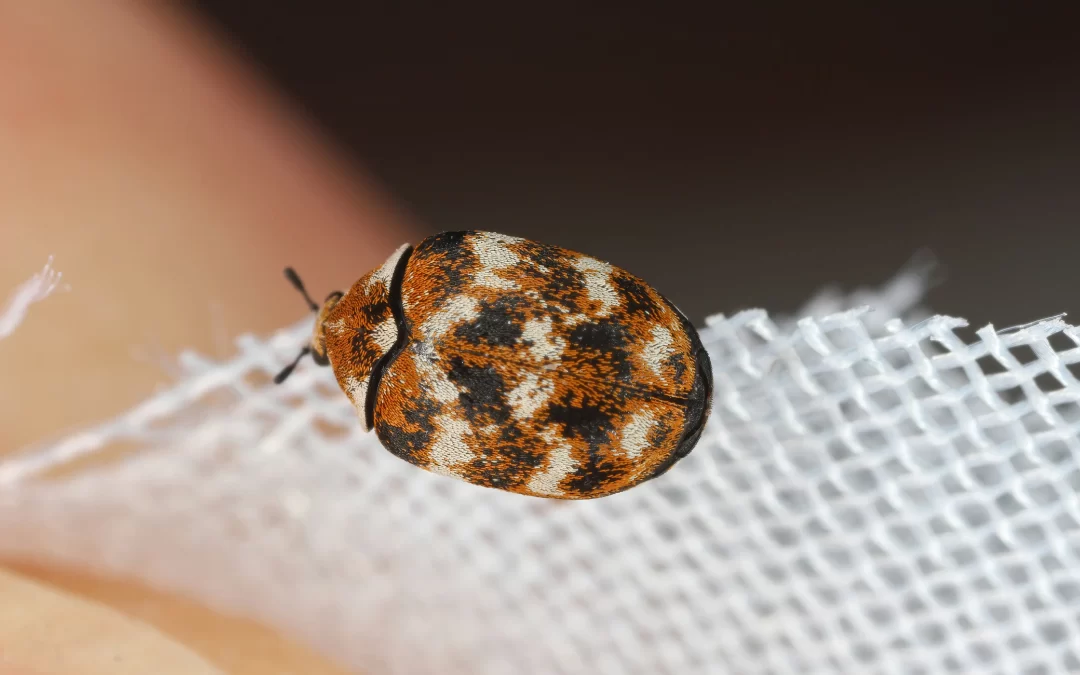
Adult carpet beetles are generally small and oval-shaped, often measuring around 2–5 mm. Their colouring varies by species. Some have patterns of white, yellow, brown, or dark scales, while others appear predominantly black or brown.
The larvae are easier to associate with damage. They are elongated and covered with hairs or bristles, with their appearance varying between species.
Common signs include:
- Irregular holes in carpets, clothing, or fabrics
- Damaged wool, silk, leather, fur, or feather materials
- Shed larval skins
- Hairy larvae in dark, secluded areas
- Adult beetles around windowsills and other light sources
If you find unexplained fabric damage, look beyond the damaged item itself. The larvae may be hiding somewhere nearby.
Do Carpet Beetles Damage Clothes and Carpets?
Yes. Carpet beetle larvae can damage a range of natural materials.
They may feed on wool carpets and rugs, upholstered furniture, stored clothing, blankets, curtains, leather, and other animal-based materials. Damage can appear as irregular holes or areas where fibres have been eaten away.
The extent of damage depends on how long the larvae remain undisturbed and how much suitable food is available.
Synthetic materials are generally less attractive as food, but fabrics containing natural fibres, hair, feathers, or other organic material can still support larvae.
How Do You Get Rid of Carpet Beetles?
Effective control starts with removing the conditions that allow larvae to survive.
Begin by thoroughly vacuuming carpets, rugs, upholstered furniture, closets, baseboards, and other areas where dust, hair, and debris accumulate. Pay particular attention to dark, rarely disturbed spaces.
Wash or clean susceptible fabrics according to their care instructions, especially clothing and bedding that has been stored for long periods.
It is also useful to inspect windows, screens, vents, and exterior openings. Repairing damaged screens and reducing potential entry points can help prevent new adults from entering.
For a persistent infestation, identifying the source is more important than simply killing the adult beetles you happen to see. Our insect control services in Edmonton can be considered when the source is difficult to locate or the infestation continues despite cleaning.
When Should You Call a Professional?
A few adult beetles do not necessarily mean you have a major infestation. However, repeated sightings combined with larvae, shed skins, or ongoing fabric damage suggest that something is supporting their development.
Professional help can be particularly useful when you cannot find the source, damage continues after cleaning, or carpet beetles keep reappearing.
At We Clean Pest Control, we focus on identifying the actual pest problem before recommending treatment. Our approach is to recommend the most appropriate and economical solution rather than automatically choosing the most expensive option.
For homeowners dealing with a confirmed infestation, our carpet beetle control in Edmonton provides a targeted option when DIY cleaning is not enough.
Frequently Asked Questions About Carpet Beetles
What Causes Carpet Beetles to Come Into Your House?
Adult carpet beetles can enter through windows, doors, vents, and other openings. They may also arrive on plants or flowers. Once indoors, they look for suitable places to lay eggs, particularly where larvae will have access to natural fibres or organic debris.
Are Carpet Beetles Caused by Dirty Houses?
Not necessarily. Carpet beetles can infest clean homes because their larvae feed on natural materials such as wool, leather, fur, feathers, and silk. However, accumulated lint, hair, and dead insects can provide additional food sources.
Do Carpet Beetles Go Away on Their Own?
An occasional adult may disappear without causing a significant problem, but an established infestation is unlikely to resolve simply because the adults are no longer visible. Eggs and larvae can remain hidden and continue developing.
How Do You Get Rid of Carpet Beetles Permanently?
The most effective approach is to find and remove the source, clean areas where larvae can feed, protect susceptible fabrics, and address possible entry points. If the infestation continues, professional identification and treatment may be necessary.
Stop Carpet Beetles Before the Damage Spreads
Knowing what causes carpet beetles makes the problem easier to understand. The adults may enter from outside, but the infestation continues because larvae find food and shelter inside the home.
Look beyond the carpet itself. Check closets, stored fabrics, furniture, attics, window areas, and other dark spaces where lint, hair, natural fibres, or dead insects may accumulate.
If you keep finding beetles, larvae, or unexplained fabric damage, identifying the source early can help prevent a small problem from becoming a much larger one.
