
Hearing scratching in the walls or finding dark droppings in the pantry can make any homeowner wonder what has moved in. Seeing a rodent does not always reveal whether it is a mouse or rat.
The two differ in size, appearance, behaviour, nesting habits, and the evidence they leave behind. Identifying the animal helps you decide how urgently to respond.
For Edmonton homeowners, a suspected rat sighting deserves particular attention. Alberta has a long-running rat control program, and confirmed sightings are investigated by the province.
What Is the Difference Between a Mouse and a Rat?
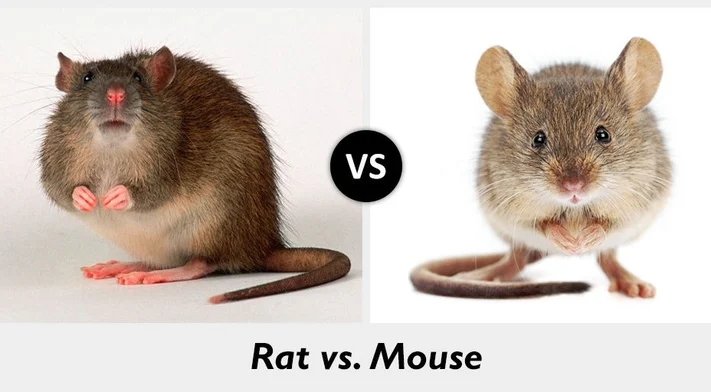
Size is the simplest difference, but identification involves more than appearance. A typical house mouse is small and slender, with a pointed nose, relatively large ears, and a long, thin tail. Its body is usually about 6.5–9 cm (2.5–3.5 inches) long.
Rats are considerably larger and heavier. In Alberta, the Norway rat is the species most commonly associated with rat control. It has a thicker body, broader head, smaller ears relative to its head, and a more substantial tail.
| Feature | Mouse | Rat |
| Body | Small and slender | Larger and heavier |
| Nose | Pointed | More blunt |
| Ears | Large relative to head | Smaller relative to head |
| Tail | Long and thin | Thicker and more robust |
| Droppings | Small and rice-like | Larger and capsule-like |
| Typical nesting areas | Walls, cabinets, insulation, appliances | Basements, crawl spaces, foundations, outdoor burrows |
| Behaviour | Curious and exploratory | Often cautious around new objects |
The difference becomes easier to determine when you consider several clues together instead of relying on size alone.
How Do I Know If I Have a Rat or Mouse?
Most homeowners do not get a clear enough look at a rodent to identify it visually. Fortunately, the signs it leaves behind can provide useful evidence.
Look for:
- Droppings: Mouse droppings are small and narrow, while rat droppings are significantly larger and thicker.
- Gnaw marks: Small marks around food packaging may point to mice. Larger holes in wood, insulation, plastic, or other materials suggest a rat.
- Sounds: Light scratching or rapid scurrying in walls may indicate mice. Heavier movement or occasional thumping can suggest a larger rodent.
- Nesting material: Shredded paper, fabric, insulation, and other soft materials can indicate a nearby nest.
Health Canada lists scratching sounds, gnawing, damaged food packages, droppings, urine, burrows, and tracks as common signs of rat or mouse activity.
Are Rats More Dangerous Than Mice?
Both rats and mice can create health and property concerns, so neither should be ignored.
Mice can contaminate food with urine, droppings, and hair. They may also gnaw on insulation, building materials, furniture, and electrical wiring. Alberta health guidance notes that mice can carry pathogens and parasites, while deer mice are associated with hantavirus.
Rats can cause similar problems, but their larger size may allow them to create more substantial physical damage. They can also create serious sanitation problems around food, garbage, and shelter.
Alberta has an additional concern. The province considers Norway rats a declared pest and maintains a Rat Control Program to prevent them from becoming established. If you believe you have seen a rat, Alberta recommends reporting the sighting so it can be investigated.
Rats are not automatically more dangerous in every situation. However, a confirmed rat sighting in Alberta should be taken seriously rather than dismissed as a large mouse.
Where Do Rats and Mice Hide in a House?
Their preferred hiding places can provide another clue.
Mice are excellent at exploiting small spaces. They may establish nests close to food, warmth, and shelter, including behind refrigerators, inside cabinets, within walls, under insulation, or around stored belongings.
Rats generally need larger access points and may be found closer to foundations, basements, crawl spaces, sheds, garbage areas, or outdoor structures. Norway rats are also capable burrowers and often seek shelter at ground level.
Location is not conclusive. Rodents adapt to the building and available resources, so consider it alongside droppings, damage, and behaviour.
Why Rodents Keep Coming Back
Identifying the animal is only part of the problem. If the conditions that attracted it remain, another rodent may eventually use the same route.
Rodents seek food, water, warmth, nesting material, and protected spaces. Practical prevention steps include:
- Store food and pet food in secure containers, and clean up crumbs or spills promptly.
- Seal gaps around doors, foundations, pipes, vents, and other potential entry points.
- Reduce clutter around garages, basements, sheds, and other hiding areas.
- Keep garbage securely closed and remove unnecessary outdoor food sources.
- Fix leaks and other sources of accessible water.
Health Canada recommends combining exclusion, sanitation, and population control rather than relying on one method.
What Should You Do If You Find a Mouse or Rat?
Do not panic, but do not ignore repeated evidence.
If you find droppings or notice scratching, check likely entry points and food sources. If signs continue, spread, or you actually see a rodent, consider getting the situation properly identified.
Avoid sweeping or vacuuming dry rodent droppings. Health Canada recommends dampening contaminated material before cleanup because disturbing dry droppings can put potentially harmful particles into the air.
If you cannot determine whether you have a mouse or rat, an inspection may be more useful than repeatedly trying different traps or treatments without knowing what you are dealing with.
At We Clean Pest Control, we believe the first step should be identifying the actual pest and source of the problem. Our approach focuses on honest advice and an appropriate solution rather than automatically choosing the most expensive option.
For more information, visit We Clean Pest Control.
What If the Signs Are Not From a Rodent?
Not every unexplained mark, smell, or bite means you have a mouse or rat.
Finding bites without droppings or gnawing may point to another pest. If bed bugs are a possibility, our guide to bed bug facts can help you compare the signs.
Different pests require different control strategies. Treating the wrong pest wastes time and allows the real problem to continue.
For bed bug problems, We Clean Pest Control also provides information about bed bug heat treatment and bed bug heat treatment equipment rental.
Frequently Asked Questions About Rats and Mice
What Is the Difference Between a Mouse and a Rat?
Mice are smaller and more slender, with relatively large ears, pointed noses, and thin tails. Rats are larger, heavier, and generally have broader heads and thicker tails. Dropping size, gnaw marks, and nesting locations can also help distinguish them.
How Can I Tell If I Have a Rat or a Mouse?
Start with the droppings. Small, rice-like droppings usually point toward mice, while substantially larger, thicker droppings suggest rats. Also consider gnaw marks, nesting material, sounds, and where the evidence is concentrated.
Are Rats More Dangerous Than Mice?
Both can contaminate food, damage property, and create health concerns. Rats may cause more physical damage because of their larger size. In Alberta, suspected rat sightings deserve particular attention because of the province’s rat control program.
Can Mice Get Into a House Through Very Small Gaps?
Yes. House mice can squeeze through surprisingly small openings. Alberta guidance notes that a house mouse can enter through a crack as small as about 1 cm.
If you hear scratching, find droppings, or see chewed materials, identifying the rodent is the first step. Knowing whether you are dealing with a mouse, rat, or another pest makes it easier to choose the right response and prevent the problem from becoming established.
