
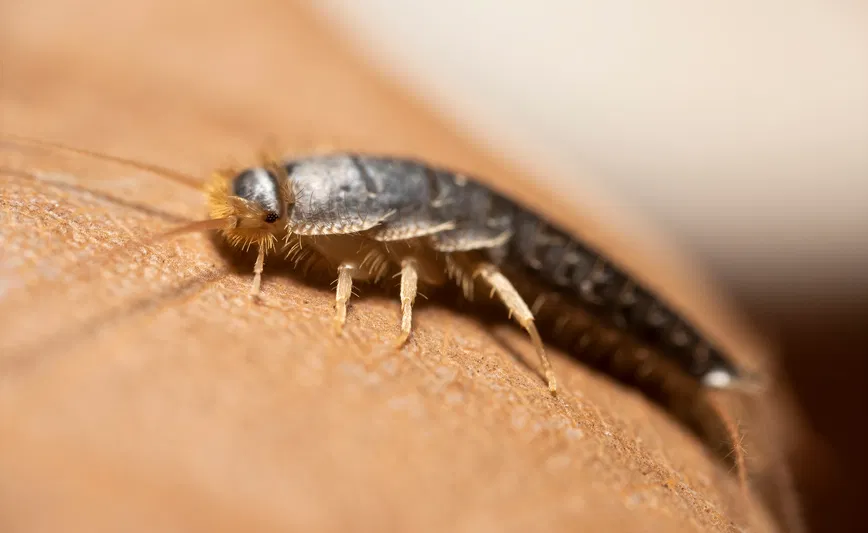
Finding a silverfish darting across the bathroom floor at night is unpleasant, but seeing one does not necessarily mean your home is overrun. Silverfish are small, fast-moving insects that prefer dark, humid spaces and often stay hidden during the day.
The key to getting rid of them is not simply killing the insects you can see. You also need to make the home less attractive to them, remove hiding places, and address how they are getting around the property.
Here is how to deal with silverfish in an Edmonton home.
What Attracts Silverfish to Edmonton Homes?
Silverfish are attracted to moisture, darkness, shelter, and materials they can feed on. Bathrooms, basements, laundry rooms, kitchens, attics, and storage areas can all provide suitable conditions.
They feed on starches and carbohydrates, including paper, cardboard, book bindings, wallpaper paste, glue, and some stored foods. This means a cluttered storage room can provide both shelter and food.
They are also nocturnal. If you regularly see them at night, particularly in a bathroom or basement, there may be a larger population hiding nearby.
An important point is that silverfish do not necessarily mean your home is dirty. A moisture problem, plumbing leak, condensation, or easy access to wall voids can be enough to create favourable conditions.
Why Do I Have Silverfish in My Bathroom?
Bathrooms are one of the most common places to encounter silverfish because they provide something these insects need: moisture.
If you are seeing silverfish bugs in bathroom areas, check underneath sinks, around toilets, behind cabinets, and along baseboards. Pay attention to areas that remain damp after showers or where condensation regularly forms.
Improving ventilation can make the room less appealing. Run the exhaust fan during and after showers, repair leaking plumbing, and consider using a dehumidifier if the room stays humid.
You should also check whether silverfish are simply passing through the bathroom from another part of the home. Activity behind baseboards or around plumbing penetrations can indicate that their hiding places extend beyond the room where you spotted them.
How Do You Get Rid of Silverfish?
The most effective approach combines moisture control, cleaning, exclusion, and monitoring rather than relying on one trick.
Start by focusing on these areas:
- Reduce moisture. Fix leaking pipes or faucets and improve ventilation in bathrooms, kitchens, basements, and laundry areas.
- Remove clutter. Get rid of unnecessary cardboard, old newspapers, paper piles, and other materials that provide food or hiding places.
- Seal gaps. Check cracks around baseboards, windows, pipes, vents, and other openings where silverfish can hide or move between spaces.
- Monitor activity. Sticky traps can help determine where silverfish are most active and whether your efforts are reducing their numbers.
These measures address the conditions that allow silverfish to remain established instead of only dealing with the insects you happen to see.
How to Get Rid of Silverfish Insects Without Making the Problem Worse
If you are looking for how to get rid of silverfish insects, it is tempting to spray every insect you find. That is not always the best starting point.
Silverfish spend much of their time hidden in cracks, wall voids, storage areas, and other inaccessible spaces. Killing an occasional insect in the open does not necessarily affect the population hiding nearby.
Instead, use visible sightings as clues. If you repeatedly find silverfish around one bathroom cabinet, basement wall, or storage area, inspect that location carefully.
Traps can also be useful for monitoring. If several traps consistently catch silverfish in the same area, you have a better indication of where activity is concentrated.
For persistent infestations, targeted professional treatment may be more appropriate than repeatedly applying products throughout the home.
Can Silverfish Damage Your Home?
Silverfish do not chew through wood or cause the kind of structural damage associated with termites. However, they can damage household belongings.
They are attracted to materials containing starches, cellulose, proteins, and adhesives. Books, photographs, wallpaper, cardboard, fabrics, and stored paper products can be affected.
Signs can include irregular feeding marks, scraped surfaces, small holes, shed skins, or dark droppings around areas where silverfish are active.
The damage may be minor when the population is small. Repeated activity over a long period, however, can become more noticeable, particularly in storage areas containing valuable books, documents, or photographs.
How to Prevent Silverfish From Coming Back
Getting rid of the insects is only part of the solution. If the conditions that attracted them remain, new silverfish can continue appearing.
Keep basements and bathrooms as dry as practical. Store books, documents, clothing, and other susceptible materials in dry areas rather than damp basements or garages.
Cardboard boxes deserve particular attention. They can provide both food and hiding places, especially when stored for long periods in dark areas.
Sealing cracks and gaps is also important. Inspect areas around plumbing, baseboards, windows, doors, and utility openings. This can limit movement between rooms and reduce potential entry points.
Regularly vacuuming corners, storage areas, and spaces behind furniture can also remove insects, shed skins, and debris that support an established population.
When Should You Call a Silverfish Exterminator?
An occasional silverfish does not always require professional treatment. If you see them repeatedly, however, it is worth finding out why.
Professional help becomes especially useful when silverfish are appearing in multiple rooms, activity continues after you have reduced moisture and clutter, or you find signs of damage to books, clothing, wallpaper, or stored materials.
A proper inspection can help distinguish a few occasional insects from an established infestation and identify areas that are difficult for homeowners to access.
At We Clean Pest Control, we believe the first step should be identifying the actual pest problem rather than automatically recommending the most expensive treatment. Our approach is based on finding the most appropriate solution for the situation. Learn more about silverfish control in Edmonton.
Are Silverfish Harmful to People?
Silverfish are generally considered nuisance pests. They do not bite or sting people, and their presence is not usually a direct health emergency.
The concern is mainly the damage they can cause to belongings and the fact that repeated sightings can indicate favourable conditions inside the home.
If silverfish are consistently appearing, treating the underlying moisture or access problem is more useful than simply removing individual insects.
For homeowners dealing with other insects as well, our Edmonton insect control resources provide additional information about common household pest problems.
Frequently Asked Questions About Silverfish
How to get rid of silverfish naturally?
Start by reducing moisture, improving ventilation, removing cardboard and paper clutter, and sealing cracks and gaps. Traps can also help monitor activity. If the infestation persists, professional treatment may be necessary.
How quickly can you get rid of silverfish?
There is no single timeline because it depends on the size and location of the infestation. Removing moisture and food sources can make the environment less suitable quickly, but an established population may require additional treatment and monitoring.
Why do I keep seeing silverfish after cleaning?
Cleaning removes some food sources and hiding places, but it does not necessarily address moisture, wall voids, cracks, or other areas where silverfish remain hidden. Recurring sightings can indicate that the underlying conditions have not been resolved.
Should I be worried if I see one silverfish?
One silverfish does not automatically mean you have a major infestation. However, repeated sightings, especially at night or in several areas of the home, are worth investigating.
Stop Silverfish Before They Settle In
The most effective way to deal with silverfish is to think beyond the individual insect. Reduce moisture, remove clutter, protect paper and fabric items, seal potential hiding places, and monitor areas where activity continues.
If silverfish keep returning despite these steps, it may be time to have the problem properly assessed. We Clean Pest Control provides residential pest control in Edmonton with a focus on identifying the real problem and recommending an appropriate solution rather than unnecessary treatments. Learn more about our residential pest control services.
