
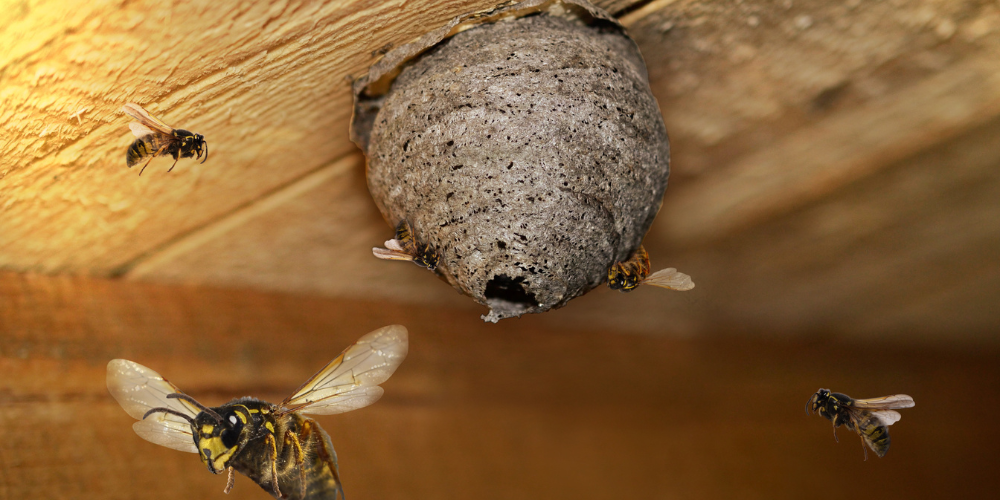
Wasps are a common sight in Edmonton during the warmer months, especially from late spring through early fall. Seeing one or two wasps visiting flowers is usually nothing to worry about. However, when their numbers begin to grow, or you discover a nest near your patio, deck, or children’s play area, they can quickly become a safety concern.
Many homeowners search for how to get rid of wasps in yard spaces after noticing increased activity around their home. Before taking action, it helps to understand why wasps are visiting your property, where they build nests, and when a nest requires professional attention.
Not every wasp should be removed. In fact, many species are beneficial pollinators and natural predators that help control garden pests. The goal is to manage nests that create a risk to people while allowing beneficial insects to continue playing their role in the local ecosystem.
Why Are Wasps Attracted to Your Yard?
A yard can provide almost everything a wasp colony needs to survive.
In spring, queen wasps search for protected places to build new nests. As the colony grows throughout summer, workers spend most of their time searching for food and water nearby.
Common attractions include:
- Flowering plants that provide nectar
- Open garbage and recycling bins
- Fallen fruit beneath trees
- Sugary drinks and outdoor meals
- Pet food left outside
- Bird baths and standing water
Late in the season, wasps often become more aggressive because their natural food sources begin to decline while colonies reach their largest size.
What Do Wasp Mounds in the Yard Mean?
If you notice wasp mounds in yard areas, you may be dealing with ground-nesting yellowjackets rather than wasps building paper nests above ground.
These wasps often build colonies inside abandoned rodent burrows, cavities beneath landscaping, or other underground spaces. Instead of seeing a hanging nest, you may only notice a small hole surrounded by increased wasp activity.
Ground nests can be especially dangerous because they are difficult to spot. Lawn mowing, gardening, or simply walking nearby may disturb the colony and trigger a defensive response.
For this reason, it is important to avoid blocking or digging around suspected entrances until you know exactly what you are dealing with.
How Can You Tell If You Have a Wasp Nest?
A single wasp flying through the yard does not necessarily mean there is a nest nearby.
Instead, watch for consistent patterns of activity.
Signs of an active nest include:
- Several wasps repeatedly flying to the same location
- Constant traffic under roof eaves or deck boards
- Wasps disappearing into holes in the ground
- Buzzing sounds coming from wall voids or sheds
- A visible paper nest attached to a tree, fence, or structure
At We Clean Pest Control, we encourage homeowners to observe wasp activity from a safe distance before attempting any action. Identifying where the insects are entering and leaving helps determine whether there is an established colony or simply individual wasps foraging for food. Careful observation often provides valuable information before any treatment decisions are made.
How to Get Rid of Wasps in Your Yard Safely
If you’re looking to get rid of wasps in yard areas, the safest solution depends on where the nest is located and how active the colony has become.
Small numbers of foraging wasps can often be managed by removing the things that attract them. An established nest, however, requires much more caution.
Here are several practical ways to make your yard less appealing to wasps:
- Keep garbage and recycling bins tightly sealed.
- Pick up fallen fruit before it begins to ferment.
- Cover food and sugary drinks during outdoor meals.
- Repair dripping outdoor faucets and eliminate standing water.
These simple changes will not eliminate an existing nest, but they can reduce the number of wasps visiting your property and discourage new colonies from settling nearby.
Is It Safe to Remove a Wasp Nest Yourself?
Many homeowners consider removing a nest themselves after spotting it under an eave or inside a shrub. Whether that is safe depends on several factors.
Small, newly established nests early in the season generally contain fewer wasps than mature colonies found in late summer. By August and September, some nests can contain hundreds or even thousands of workers that will aggressively defend the colony if they feel threatened.
Attempting to remove a nest without proper protective equipment can lead to multiple stings, particularly if the nest is disturbed accidentally.
You should never attempt to remove a nest yourself if:
- Someone in your household has a known allergy to wasp stings.
- The nest is inside a wall, roof, chimney, or other enclosed space.
- The nest is difficult to access safely.
- Ground-nesting wasps are entering and exiting through multiple openings.
In these situations, keeping your distance is usually the safest choice. If the nest is active and located close to entrances, patios, or other high-traffic areas, contacting a wasp exterminator in Edmonton is often the safest option because these nests can become increasingly defensive as the colony grows.
What Should You Do If You Find a Ground Nest?
Ground nests deserve extra caution because they are often hidden until someone accidentally walks over them.
Unlike hanging paper nests, underground colonies are protected by soil, making them more difficult to locate and more likely to surprise homeowners.
If you discover a suspected ground nest:
- Mark the area from a safe distance.
- Keep children and pets away.
- Avoid mowing or digging nearby.
- Do not pour gasoline, boiling water, or other household chemicals into the opening.
These home remedies are not only unreliable but can also damage your lawn, create fire hazards, or cause the colony to become more defensive.
Ground-nesting yellowjackets are particularly defensive because vibrations from footsteps or lawn equipment can be interpreted as a threat to the colony. Giving the nest plenty of space until it can be properly assessed is the safest approach.
Can You Prevent Wasps From Returning?
While no yard can be guaranteed to remain completely free of wasps, regular maintenance can make nesting much less likely.
Start each spring by inspecting common nesting locations before colonies become established. Pay particular attention to sheds, decks, roof overhangs, fences, play structures, and outdoor storage areas.
Keeping vegetation trimmed around the house also makes it easier to spot new nests while they are still small.
If you notice frequent wasp activity in the same area every year, it is worth inspecting the property for structural gaps or sheltered spaces that consistently attract queens looking for nesting sites.
Many homeowners who use residential pest services discover that routine seasonal inspections can identify potential nesting locations before colonies become fully established, reducing the likelihood of recurring problems year after year.
Frequently Asked Questions
When Are Wasps Most Aggressive in Edmonton?
Wasps usually become more aggressive in late summer and early fall. By this time, colonies have reached their largest size, natural food sources begin to decline, and workers spend more time searching for sugary foods around homes and outdoor gathering areas.
Do Wasps Return to the Same Nest Every Year?
No. Most wasp colonies die off at the end of the season. Fertilized queens leave the nest before winter, survive in protected locations, and build entirely new nests the following spring. While they do not reuse old nests, they may build new ones in the same general area if conditions remain favourable.
What Is the Difference Between Bees and Wasps?
Although they are often confused, bees and wasps behave differently. Bees are generally less aggressive away from their hive and play an essential role in pollination. Wasps have slimmer bodies, smoother appearances, and are active predators that also feed on sugary foods later in the season.
Should You Leave a Wasp Nest Alone?
If a nest is located well away from areas where people regularly spend time, it may not require removal. However, nests near entrances, patios, decks, sidewalks, playgrounds, or other high-traffic areas should be assessed because they increase the risk of accidental encounters and stings.
Enjoy Your Yard Without Worrying About Wasps
Wasps are an important part of the environment, helping pollinate plants and naturally control other insect populations. However, when they build nests close to your home or where your family spends time outdoors, they can quickly become more than just a nuisance.
Learning what attracts wasps, recognizing the early signs of nesting activity, and taking preventive steps around your property can significantly reduce the risk of unwanted encounters. If you discover an active nest or notice unusually high wasp activity, addressing the problem early is usually safer and more effective than waiting for the colony to continue growing.

Recent Comments