
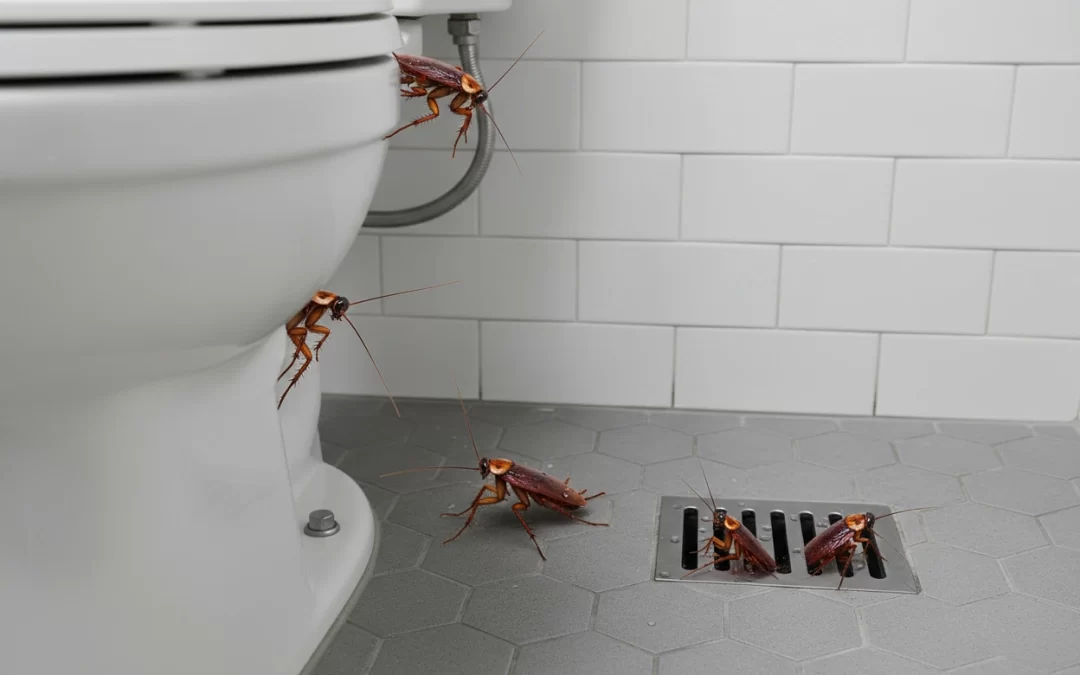
If you’ve ever spotted a cockroach near a sink, bathtub, or floor drain and wondered where it came from, you’re not alone. Many homeowners are surprised to learn that plumbing systems can act as highways for cockroaches.
The idea sounds unsettling, but it is based on how certain cockroach species survive and move through urban environments. Plumbing networks provide moisture, darkness, shelter, and access to food sources, making them attractive pathways for pests.
The good news is that seeing a cockroach near a drain does not automatically mean your pipes are infested. However, repeated sightings around sinks, showers, or floor drains may indicate a larger problem that deserves attention.
Can Cockroaches Really Travel Through Pipes?
Yes, cockroaches can travel through plumbing systems.
Certain species, particularly American cockroaches and Oriental cockroaches, thrive in damp environments and are frequently found in sewer systems, drainage networks, and utility tunnels. These insects can move through pipes and enter buildings through drains, damaged plumbing connections, or gaps around pipe penetrations.
Cockroaches have flexible bodies that allow them to squeeze through surprisingly small spaces. They can flatten themselves to fit through narrow openings that appear far too small for them at first glance.
While they do not live inside every household pipe, they often use plumbing systems as travel routes between food, water, and shelter.
Why Are Cockroaches Attracted to Plumbing Systems?
One of the biggest reasons cockroaches are associated with drains is moisture.
Like all living creatures, cockroaches need water to survive. Plumbing systems provide a reliable source of humidity and condensation, especially in kitchens, bathrooms, laundry rooms, and basements.
Drains can also contain organic material that serves as a food source. Soap residue, grease buildup, food particles, and debris create an environment that attracts pests.
Cockroaches are particularly drawn to:
- Damp, dark areas with minimal human activity
- Food residue inside drains and pipes
- Leaking plumbing fixtures
- Condensation around pipes
- Sewer systems connected to buildings
These conditions explain why kitchens and bathrooms are often the first places homeowners notice cockroach activity.
How Do Cockroaches Get Into Homes Through Drains?
Many people search for this exact question after seeing a roach emerge from a sink or shower drain.
Most plumbing systems include a P-trap, which is the curved section of pipe designed to hold water. This water barrier helps block sewer gases and prevents pests from entering the home through the drain.
Problems can occur when:
- A drain is rarely used and the water evaporates
- A P-trap is damaged
- Plumbing components are improperly installed
- Cracks develop in drain systems
- Pipe seals deteriorate over time
Once these barriers fail, cockroaches may gain access to interior spaces through plumbing openings.
In multi-unit buildings, the risk can be even greater because shared plumbing systems connect multiple apartments or condos. A cockroach problem in one unit may eventually affect neighboring units if conditions allow.
What Are the Signs That Cockroaches Are Coming From Your Drains?
Not every cockroach sighting near a sink means the insects are emerging from the drain itself.
However, certain warning signs make plumbing-related activity more likely.
Watch for:
- Cockroaches appearing consistently near sinks, tubs, or floor drains.
- Increased activity during nighttime hours.
- Small dark droppings around plumbing fixtures.
- Musty or unpleasant odors coming from drains.
- Sightings that continue despite thorough cleaning.
If you repeatedly find cockroaches in the same moisture-prone areas, the plumbing system may be contributing to the infestation.
Can Cockroaches Live Inside Pipes?
This is another question homeowners frequently ask.
The answer depends on the type of pipe and the conditions inside it.
Cockroaches generally do not spend their entire lives inside household drain pipes. However, they can survive in connected environments such as sewer systems, drainage channels, utility corridors, and areas surrounding plumbing infrastructure.
Some species are particularly adapted to humid environments and may spend significant time near drains and plumbing access points.
More commonly, cockroaches use pipes as temporary travel routes before settling in wall voids, cabinets, crawl spaces, utility rooms, or behind appliances.
Why Are Cockroaches Common in Apartment Buildings?
Cockroach infestations are often more challenging in apartments, condominiums, and multi-unit properties because pests can move between units through shared infrastructure.
Even if your home is clean, neighboring activity can still affect your unit.
Common pathways include:
- Plumbing penetrations
- Utility openings
- Shared wall voids
- Electrical conduits
- Ventilation systems
This is one reason professional inspections often focus on the entire building environment rather than a single apartment.
Property managers and landlords frequently discover that treating only one unit does not solve the problem if cockroaches continue moving through interconnected areas.
What Can You Do to Stop Cockroaches From Coming Up Drains?
Prevention focuses on making your home less attractive and less accessible.
Several practical steps can reduce risk significantly.
First, maintain water barriers in drains by running water periodically in sinks, showers, and floor drains that are rarely used.
Second, keep drains clean. Organic buildup can attract pests and create favorable conditions for activity.
Third, repair leaks promptly. Even small plumbing leaks can provide enough moisture to support cockroach populations.
Fourth, inspect areas where pipes enter walls and floors. Sealing gaps around plumbing penetrations can eliminate common entry points.
Small prevention measures often make a surprisingly large difference.
Will Pouring Bleach Down the Drain Kill Cockroaches?
Many homeowners attempt DIY solutions when they first notice cockroaches near drains.
Bleach may kill individual cockroaches that come into direct contact with it. However, it is not considered a reliable long-term solution.
The problem is that most infestations originate far beyond the visible portion of the drain. Cockroaches often retreat deeper into hidden spaces where household products cannot reach them effectively.
Similarly, boiling water, vinegar, and other home remedies may temporarily reduce activity but rarely eliminate the underlying infestation.
When cockroach activity continues despite cleaning efforts, the source is often larger than the drain itself.
When Should You Call a Professional for Cockroach Control?
A single cockroach does not always indicate a major infestation.
However, repeated sightings should never be ignored.
Professional evaluation is often recommended when:
- Cockroaches are seen regularly.
- Activity increases over time.
- Roaches are visible during daylight hours.
- DIY methods fail to produce results.
- Multiple rooms are affected.
Daytime sightings are particularly concerning because cockroaches are naturally nocturnal. Seeing them during the day can indicate overcrowding and a growing population.
For homeowners dealing with persistent infestations, professional pest control for cockroaches focuses on identifying the source rather than simply treating visible insects.
Why Professional Inspections Often Find Hidden Sources
One of the biggest mistakes people make is assuming the drain itself is the entire problem.
In reality, drains are often just the visible symptom.
Cockroaches may actually be hiding behind cabinets, inside wall voids, beneath appliances, around leaking pipes, or in utility spaces. Without locating these hidden harborage areas, infestations often return.
At We Clean Pest Control, inspections focus on confirming the actual source before recommending treatment. This helps avoid unnecessary services and ensures efforts are directed toward solving the real problem.
For homeowners seeking residential pest services, identifying how cockroaches are entering the property is often the most important step toward long-term control.
Frequently Asked Questions
Can cockroaches come up through shower drains?
Yes. If the plumbing barrier is compromised or a drain trap has dried out, cockroaches may travel through connected plumbing systems and emerge from shower drains.
Why do I only see cockroaches at night?
Cockroaches are primarily nocturnal. They typically hide during the day and become active after dark when searching for food and water.
Does a clean house prevent cockroaches?
Cleanliness helps reduce food sources, but it does not guarantee protection. Cockroaches can enter even well-maintained homes if moisture, entry points, or neighboring infestations are present.
Are cockroaches in drains dangerous?
Cockroaches can carry bacteria and contaminate surfaces they contact. Their droppings, shed skins, and body fragments may also contribute to allergies and asthma symptoms in sensitive individuals.
Don’t Ignore Cockroaches Near Drains
Cockroaches near sinks, showers, and floor drains are not always coming directly from the plumbing system, but they should never be dismissed as a random occurrence.
Repeated sightings often indicate a hidden source of moisture, access to food, or an infestation developing somewhere nearby. Because cockroaches can travel through plumbing networks, especially in multi-unit buildings, addressing the problem early is far easier than dealing with a large infestation later.
If cockroach activity continues despite cleaning and prevention efforts, a professional inspection can help determine whether drains, plumbing systems, or another hidden source is responsible for the problem. Early intervention almost always results in faster, more effective control.
