
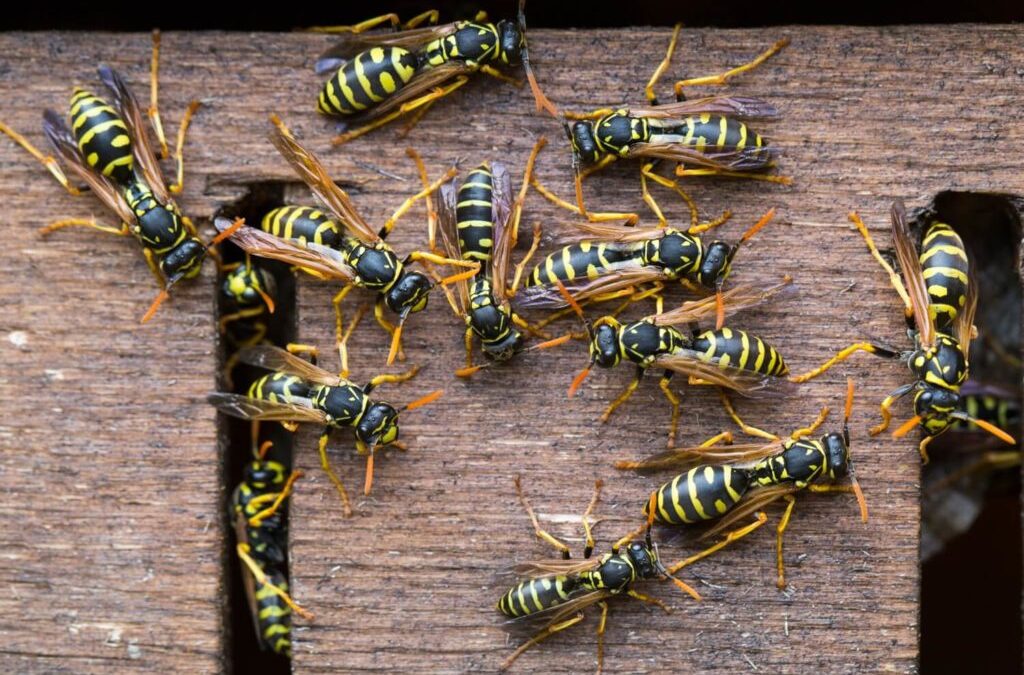
You removed the nest last year. You cleaned the patio. You even avoided leaving food outside. Yet somehow, the wasps are back again.
If this sounds familiar, you’re not imagining things. Many homeowners notice wasps returning to the same corners of their property year after year. The same eave, the same deck, the same shed, or even the same section of the fence seems to attract them every summer.
The reason is surprisingly simple. Wasps are excellent at finding locations that provide shelter, food, and protection. Once an area proves successful for a colony, future queens often choose nearby locations for their own nests.
Understanding why wasps keep coming back is the first step toward preventing the problem.
Why Do Wasps Return to the Same Place Every Year?
One of the most common misconceptions is that wasps reuse old nests.
In most cases, they don’t.
The colony that built last year’s nest dies off when temperatures drop. Only newly fertilized queens survive the winter. When spring arrives, those queens begin searching for suitable nesting locations.
So why do they often choose the same area?
Because the conditions that made the location attractive last year are usually still present.
If a sheltered roof overhang protected a nest from rain one summer, it will likely provide the same protection next year. If a deck offers shade, warmth, and limited human disturbance, future queens will recognize it as a safe place to start a colony.
The nest itself may be gone, but the ideal nesting conditions remain.
Do Wasps Come Back to Old Nests?
This question appears frequently in online searches, and the answer is generally no.
Most wasp species build a completely new nest each season. However, they often construct that new nest very close to a previous nesting site.
Homeowners sometimes mistake this for nest reuse because the new colony appears in nearly the same location.
Old nests can still influence future activity. Visible nesting structures may signal that the area provided suitable conditions before. In some cases, remnants of nesting material can also remain in protected spaces for years.
Removing abandoned nests won’t guarantee that wasps stay away, but it can reduce some of the visual cues that attract future queens.
What Makes a Property Attractive to Wasps?
Wasps are constantly searching for three things: shelter, food, and water.
Properties that provide all three become highly attractive during the nesting season.
Common attractants include:
- Roof overhangs and soffits
- Decks and covered patios
- Sheds and detached garages
- Outdoor garbage bins
- Pet food left outside
- Fruit trees and fallen fruit
- Bird baths and standing water
Many homeowners focus on the nest itself while overlooking the factors that encouraged the nest in the first place.
Removing a colony without addressing these attractants often leads to recurring problems.
Why Are Wasps Always Around My Deck or Porch?
Porches and decks are among the most common nesting locations.
From a wasp’s perspective, these areas offer nearly everything needed for survival.
They provide shelter from rain, protection from wind, and countless hidden corners where a small nest can develop unnoticed. Railings, beams, light fixtures, and overhangs all create ideal nesting opportunities.
At the same time, these outdoor living spaces often provide easy access to food. Summer barbecues, sugary drinks, pet bowls, and outdoor garbage containers can attract foraging wasps from considerable distances.
This combination of shelter and food explains why many homeowners repeatedly ask, “Why do wasps keep coming back to my porch?”
What Time of Year Do Wasps Start Building Nests?
Most wasp activity begins much earlier than people realize.
The queens emerge in spring, often when temperatures consistently rise above freezing. At this stage, they are alone and focused on finding a nesting location.
The first nest may be no larger than a golf ball. Because it is small and contains only a queen and a few developing workers, it often goes unnoticed.
By midsummer, however, the colony can grow dramatically. This is when homeowners typically start seeing increased activity around their property.
The best time to identify and address potential nesting sites is before colonies reach their peak size.
Why Do Some Homes Have More Wasp Problems Than Others?
Two houses on the same street can experience completely different levels of wasp activity.
The difference usually comes down to environmental conditions.
Factors that increase the likelihood of recurring wasp problems include:
- Large amounts of sheltered exterior space
- Mature landscaping with flowering plants
- Nearby water sources
- Outdoor eating and entertaining areas
- Limited natural predators
Homes with multiple attractive nesting locations naturally experience more scouting activity from queens each spring.
In our experience at We Clean Pest Control, recurring infestations are often linked to a combination of nesting opportunities and easily accessible food sources rather than a single problem area.
Can Wasps Remember a Good Nesting Location?
Not in the way humans remember places.
However, wasps rely heavily on environmental cues.
Queens are naturally drawn to structures that provide the same characteristics as successful nesting sites. This instinct explains why colonies often appear in similar locations year after year.
Think of it less as memory and more as repeated selection of ideal habitat.
If a particular corner of your property consistently offers protection from weather, safety from predators, and nearby food sources, it will continue attracting nesting queens.
Why Do Wasps Become More Aggressive Later in Summer?
Many homeowners notice that wasps seem relatively harmless in early summer but become increasingly aggressive by August and September.
There are two reasons for this.
First, colonies are much larger. More workers mean more activity and more opportunities for human encounters.
Second, food preferences begin to change.
Early in the season, wasps primarily seek protein sources to feed developing larvae. Later in summer, workers begin searching for sugary foods to sustain themselves.
This shift brings them into closer contact with people enjoying outdoor meals, fruit trees, beverages, and garbage bins.
The result is increased visibility and more defensive behavior around nesting sites.
How Can You Prevent Wasps From Returning?
Complete prevention is impossible because queens naturally explore large areas while searching for nesting locations.
However, you can make your property far less attractive.
Some of the most effective prevention measures include:
- Sealing cracks and gaps around soffits and siding
- Keeping garbage containers tightly closed
- Cleaning outdoor eating areas promptly
- Removing fallen fruit from yards
- Eliminating standing water
- Regularly inspecting common nesting locations
The earlier these steps are taken in spring, the more effective they tend to be.
Many homeowners searching for wasp exterminators in Edmonton discover that long-term prevention is often just as important as removing active nests.
When Should You Be Concerned About Wasp Activity?
Not every wasp sighting indicates a problem.
Individual wasps frequently travel long distances while searching for food. Seeing one or two wasps in your yard does not necessarily mean a nest is nearby.
However, repeated activity around the same location deserves attention.
Warning signs include:
- Multiple wasps entering and exiting the same opening
- Consistent activity around rooflines or soffits
- Visible nesting structures
- Increased wasp traffic near decks or patios
At this stage, early intervention is usually safer and easier than waiting for the colony to expand.
For homeowners exploring residential pest services, identifying nests while they are still small often prevents much larger problems later in the season.
Frequently Asked Questions
Why do wasps keep coming back to my house every summer?
Wasps return because your property continues to provide suitable nesting conditions such as shelter, food, and water. Even if previous nests are removed, future queens may find the area attractive.
Do wasps reuse old nests?
Generally, no. Most wasp species build new nests every year. However, they may construct those nests very close to previous nesting sites.
What attracts wasps the most?
Food sources, water, and sheltered nesting areas are the biggest attractants. Garbage bins, fruit trees, pet food, and covered structures are common examples.
Will removing a nest stop wasps from returning next year?
Removing a nest helps, but it does not eliminate the conditions that attracted wasps initially. Long-term prevention requires reducing nesting opportunities and food sources.
The Real Reason Wasps Keep Coming Back
Wasps are not returning because they are targeting your property specifically. They are returning because your property continues to offer exactly what they need.
Sheltered nesting locations, easy access to food, and reliable water sources create an environment that attracts new queens every spring. The nest may be new, but the reasons behind its location are often the same.
Understanding these patterns helps homeowners move beyond simply removing nests and start addressing the conditions that cause repeat infestations in the first place. When those conditions change, the cycle of annual wasp problems often becomes much easier to break.
