
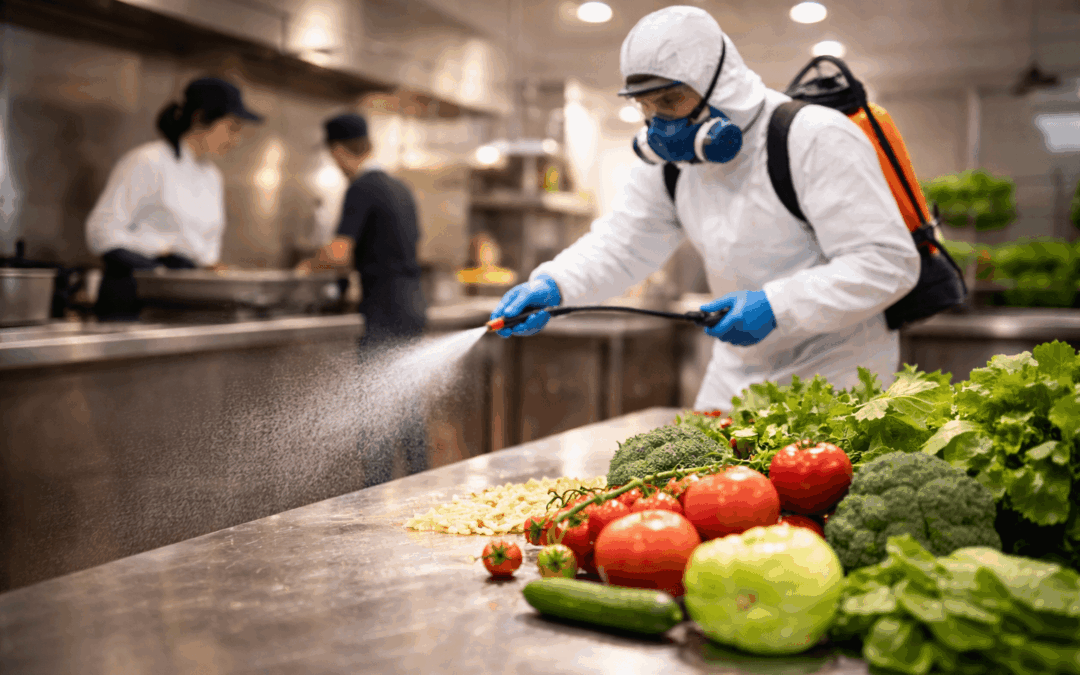
Food safety depends on much more than clean equipment and proper food handling. One overlooked pest issue can contaminate ingredients, damage your reputation, and lead to failed inspections or costly product recalls. That is why HACCP pest control is considered an essential part of every food safety management system.
Whether you operate a restaurant, commercial kitchen, food processing facility, warehouse, or grocery store, pest prevention should be built into your daily operations rather than treated as an emergency response. Understanding what inspectors look for and how to maintain compliance can help protect both your customers and your business.
Is Pest Control a Requirement Under HACCP?
Yes. While HACCP itself does not prescribe one specific pest control method, it requires businesses to identify, assess, and manage hazards that could affect food safety. Pests are considered a significant biological and physical hazard because they can introduce bacteria, viruses, allergens, droppings, hair, nesting materials, and other contaminants into food production environments.
Effective HACCP pest control requirements typically include:
- Preventing pests from entering the facility
- Monitoring for signs of pest activity
- Taking corrective action when pests are detected
- Keeping records of inspections, treatments, and monitoring
- Verifying that control measures remain effective
Rather than reacting to infestations, HACCP focuses on preventing them before they create a food safety risk.
What Are the HACCP Pest Control Requirements?
A pest management program under HACCP should support your overall food safety plan. Inspectors generally expect businesses to demonstrate that pest risks are identified, monitored, and controlled on an ongoing basis.
Key elements usually include:
- Regular inspections of the facility
- Clearly identified monitoring devices and their locations
- Proper sanitation and waste management
- Maintenance of doors, windows, drains, and structural gaps
- Documented corrective actions when activity is found
- Staff training to recognize and report pest evidence
The exact requirements vary depending on your operation, but documentation is just as important as the physical control measures. If it is not recorded, it is difficult to prove the program is being followed.
Why Are Pests Such a Serious Food Safety Hazard?
Pests create multiple contamination risks at every stage of food production and storage.
Rodents can contaminate ingredients with urine and droppings while chewing through packaging, insulation, and electrical wiring. Cockroaches spread bacteria as they move between drains, waste areas, and food preparation surfaces. Stored product insects can infest dry goods such as flour, grains, cereals, and spices, leading to product loss and customer complaints. Birds may introduce droppings, feathers, and parasites around loading docks or storage facilities.
Beyond contamination, an active infestation can result in:
- Failed food safety audits
- Product recalls
- Temporary facility closures
- Regulatory penalties
- Damage to customer trust
For this reason, pest management should never be viewed as a separate maintenance task. It is an important part of food safety risk management.
How Often Should Food Businesses Monitor for Pests?
There is no universal schedule that applies to every facility. Monitoring frequency should match the level of risk within your operation.
Facilities handling raw ingredients, storing large food inventories, or operating continuously often require more frequent inspections than lower-risk businesses.
Typical monitoring activities include checking:
- Rodent stations
- Insect monitoring traps
- Exterior entry points
- Waste storage areas
- Food storage rooms
- Production equipment
- Loading docks
Routine monitoring allows businesses to identify small issues before they develop into larger infestations that interrupt operations.
What Documentation Should a HACCP Pest Control Program Include?
Good record keeping is one of the easiest ways to demonstrate compliance during inspections.
Your documentation should generally include:
- Pest inspection reports
- Site maps showing monitoring device locations
- Pest activity observations
- Corrective actions taken
- Treatment records
- Trend analysis over time
- Verification that issues have been resolved
Many businesses also keep photographs of problem areas and repairs to support inspection records.
For larger facilities, organized documentation helps identify recurring issues before they become expensive problems.
How Can Food Businesses Prevent Pest Problems?
Prevention is always more effective than eliminating a well-established infestation. Small operational improvements often make a significant difference.
Start by reducing the conditions that attract pests.
Keep food storage areas clean and organised. Rotate inventory using first-in, first-out practices so products do not remain undisturbed for long periods. Clean spills immediately, especially around shelving and equipment. Store ingredients off the floor and away from walls to allow regular inspection.
Structural maintenance is equally important. Seal gaps around pipes, repair damaged door sweeps, install tight-fitting screens where appropriate, and ensure drains remain clean and functional.
Waste management also plays a major role. Overflowing bins, leaking dumpsters, and accumulated cardboard provide ideal food and shelter for rodents and insects.
Businesses in Edmonton often face additional seasonal pest pressures as rodents seek indoor shelter during colder months, making regular inspections even more valuable throughout the year.
What Happens if Pest Activity Is Found?
Finding evidence of pests does not automatically mean a business has failed its HACCP program. What matters is how quickly and effectively the issue is addressed.
Corrective actions may include:
- Identifying the source of the infestation
- Removing contaminated products where necessary
- Repairing structural entry points
- Increasing monitoring frequency
- Improving sanitation procedures
- Reviewing staff practices
- Updating hazard assessments if needed
Every corrective action should be documented and verified to ensure the problem has been resolved rather than simply treated.
When Should You Work With a Professional Pest Control Company?
Some preventive measures can be handled internally, but food businesses often benefit from professional support because pest management requires specialised knowledge, detailed documentation, and ongoing monitoring.
Professional commercial pest services can help businesses build inspection schedules, identify hidden risk areas, monitor trends, and provide records that support food safety audits.
At We Clean Pest Control, we work with restaurants, food facilities, warehouses, commercial properties, and multi-unit buildings by focusing on practical prevention, accurate pest identification, and treatment plans that match the actual problem instead of recommending unnecessary services. Our goal is to help businesses maintain food safety while reducing disruption to daily operations.
Frequently Asked Questions
Is pest control part of HACCP?
Yes. Pest management is considered an important prerequisite program that supports HACCP by reducing biological and physical contamination risks before they affect food safety.
What pests are most common in food facilities?
Rodents, cockroaches, flies, stored product insects, ants, and birds are among the most common pests found in food processing, storage, and food service environments.
How often should pest inspections be carried out?
The appropriate frequency depends on the type of food business, production volume, and overall risk. Higher-risk facilities typically require more frequent inspections and monitoring than lower-risk operations.
Can a food business pass an inspection if pests are found?
It depends on the situation. Inspectors typically evaluate the severity of the activity, whether contamination has occurred, and whether the business has effective monitoring, documentation, and corrective actions in place. A well-managed response is often just as important as preventing pest activity in the first place.
