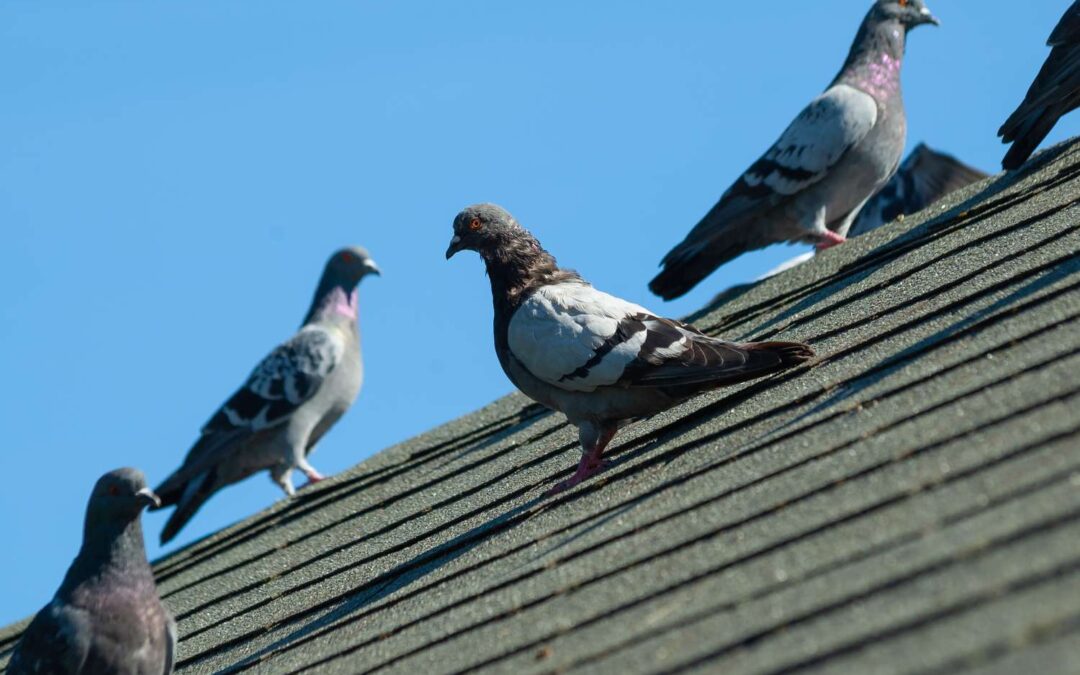
Hearing constant cooing overhead or finding droppings on your driveway often means pigeons have decided your roof is a good place to stay. Once they settle in, they tend to return year after year unless the conditions that attracted them are changed.
Learning how to get rid of pigeons on roof areas starts with understanding why they choose your property in the first place. While pigeons may seem harmless, large groups can damage roofing materials, clog gutters, spread parasites, and create ongoing cleaning problems.
This guide explains why pigeons gather on roofs, what actually works to keep them away, and when professional bird control becomes the safest option.
Why Do Pigeons Choose Your Roof?
Pigeons look for three basic things: shelter, safety, and nearby food.
Roofs naturally provide all three. High locations help birds avoid predators, while ledges, chimneys, and solar panels create protected spaces for roosting and nesting. If food sources such as bird feeders, overflowing garbage bins, or nearby restaurants are available, pigeons are even more likely to stay.
In Edmonton, pigeons are active throughout the year. They often return to the same nesting locations because they are highly territorial and remember successful breeding sites.
Once a pair establishes a nesting area, more birds frequently follow.
What Problems Can Pigeons Cause?
A few birds may not seem like a serious issue, but a growing flock can create expensive maintenance problems.
Common issues include:
- Acidic droppings that gradually damage roofing materials, siding, and painted surfaces.
- Blocked gutters caused by nests, feathers, and debris.
- Constant noise from cooing, scratching, and movement early in the morning.
- Bird mites, fleas, and other parasites that may migrate indoors.
- Reduced airflow beneath solar panels, which can affect efficiency over time.
The longer pigeons remain on a roof, the more difficult it usually becomes to discourage them from returning.
What Is the Best Way to Get Rid of Pigeons on Roof Areas?
Many homeowners search for the best way to get rid of pigeons on roof spaces because simple scare tactics often stop working after only a few days.
The most effective solution combines several methods rather than relying on a single deterrent.
For long-term success, professionals often recommend:
- Installing bird spikes on narrow ledges where pigeons regularly perch.
- Using bird netting or exclusion systems to block access to nesting areas.
- Closing gaps beneath solar panels with specially designed mesh.
- Removing food and water sources around the property.
- Cleaning old nests and droppings after birds have left to reduce scent cues that attract returning flocks.
The goal is not to harm pigeons but to make the property less attractive for roosting.
Do Bird Spikes and Bird Netting Really Work?
Yes, when installed correctly.
Bird spikes do not injure birds. Instead, they make it difficult for pigeons to land comfortably on ledges, gutters, signs, and roof peaks.
Bird netting works differently. It creates a physical barrier that prevents birds from reaching preferred nesting locations. This is particularly effective for roof overhangs, balconies, warehouse entrances, and areas beneath solar panels.
Poorly installed products, however, often leave small gaps that pigeons quickly learn to exploit. That is one reason many property owners eventually seek professional installation instead of repeatedly replacing DIY products.
How Can You Get Rid of Pigeons on Roof Without Hurting Them?
Many people want humane solutions, and fortunately, they are usually the most effective ones.
Rather than trying to trap or harm birds, focus on making your property less appealing.
Simple preventive steps include:
- Remove accessible food sources around the home.
- Keep garbage containers tightly sealed.
- Trim tree branches that provide easy roof access.
- Install physical exclusion products before nesting season whenever possible.
These measures encourage pigeons to relocate naturally without causing unnecessary harm.
It’s also important to remember that birds and active nests may be protected under wildlife regulations depending on the species and situation. Existing nests containing eggs or young birds should never be disturbed without understanding the applicable rules.
Why Do Pigeons Keep Coming Back?
Pigeons have excellent spatial memory.
If a roof has successfully provided shelter in the past, they often return every breeding season. Even after birds leave temporarily, leftover nesting material, droppings, and familiar scents can attract them back.
This is why simply chasing birds away rarely solves the problem.
At We Clean Pest Control, we often explain that successful bird management focuses on preventing future nesting, not just removing the birds you currently see.
Long-term exclusion usually delivers much better results than temporary deterrents alone.
When Should You Consider Professional Pigeon Control in Edmonton?
Sometimes the problem grows beyond what homeowners can safely handle.
Large flocks, difficult roof access, or pigeons nesting beneath solar panels usually require specialized equipment and safe working practices.
Professional pigeon control in Edmonton may be appropriate if you notice recurring nesting despite repeated cleaning, excessive droppings damaging your property, or birds occupying areas that are difficult to reach safely.
An inspection can identify how pigeons are accessing the roof and recommend the most appropriate exclusion methods for your particular property.
Can Pigeons Damage Your Roof?
Yes, although the damage usually develops gradually rather than overnight.
Bird droppings contain acidic compounds that can stain or deteriorate roofing materials over time. Nesting materials may block drainage systems, increasing the risk of standing water and moisture damage.
Homes with solar panels face an additional concern. Pigeons often nest underneath the panels because they provide warmth, protection from predators, and shelter from harsh weather. Large nests may interfere with airflow and make future maintenance more difficult.
Regular inspections can help detect these problems before repairs become costly.
Residential Pest Services Can Help Prevent Recurring Problems
Bird activity is sometimes only one part of a larger issue.
Properties that attract pigeons may also experience problems with insects, rodents, or other wildlife taking advantage of food, shelter, or structural openings. Comprehensive residential pest services often look at the entire property to identify conditions that contribute to recurring pest activity rather than focusing on a single species.
Addressing those underlying factors can make long-term bird control much more effective.
Knowing how to get rid of pigeons on roof spaces is about much more than chasing birds away for a few days. Long-term success comes from understanding what attracts pigeons, removing those conditions, and installing effective exclusion measures before the flock becomes established. For Edmonton homeowners, acting early can help prevent roof damage, reduce cleaning costs, and stop pigeons from returning season after season.
Frequently Asked Questions
What attracts pigeons to a roof?
Pigeons are attracted by elevated nesting locations, shelter from predators, nearby food sources, and protected spaces such as chimneys, ledges, or solar panels.
Will pigeons leave on their own?
Sometimes they will if food becomes scarce or nesting conditions change. However, established flocks often return to the same roof every year unless effective prevention measures are installed.
Are pigeon droppings dangerous?
Large accumulations of droppings can contain bacteria, fungi, and parasites. They can also create slipping hazards and damage building materials if left untreated for long periods.
Should I remove a pigeon nest myself?
If the nest is active with eggs or young birds, removal may be restricted depending on wildlife regulations. It is best to confirm the situation before disturbing any nest.
