
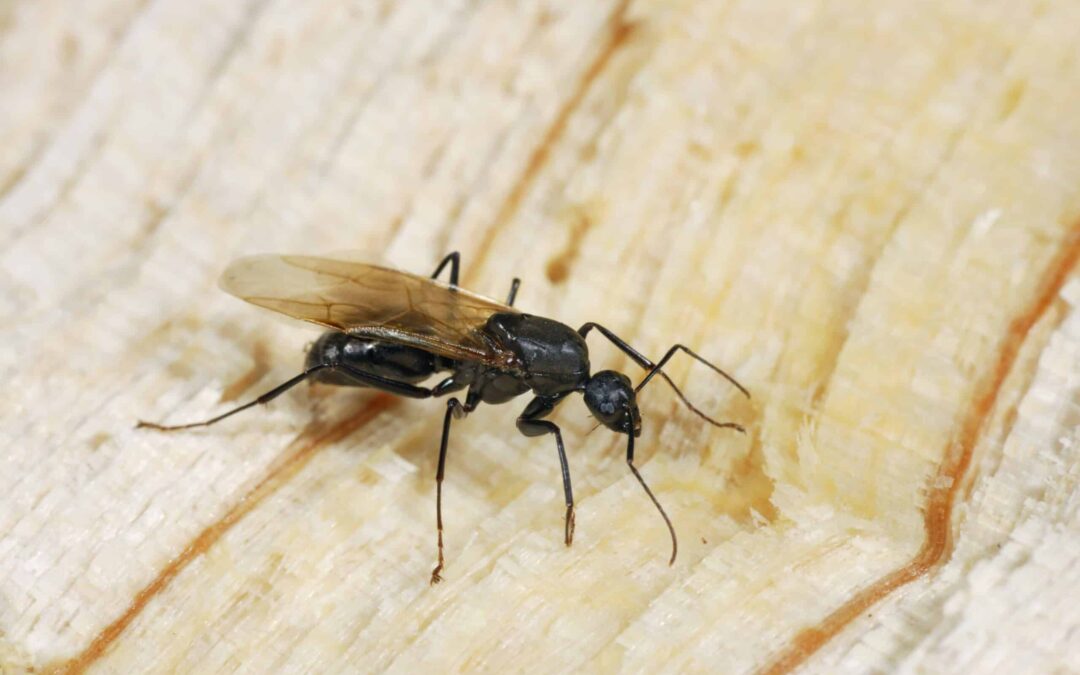
If you have started noticing large black ants around your home in late spring, you may be wondering: are carpenter ants seasonal? The short answer is yes, but only to a point.
Carpenter ants follow a predictable annual cycle that makes them much more visible during warmer months. However, that does not mean they disappear completely when temperatures drop. In Edmonton, colonies can remain hidden inside heated buildings throughout winter, becoming active again as conditions improve.
Understanding carpenter ant season helps homeowners recognize when sightings are normal, when they may signal an infestation, and what steps can reduce the risk of damage before a colony becomes established.
Are Carpenter Ants Seasonal?
Yes. Carpenter ants are strongly influenced by seasonal temperatures, food availability, and moisture.
Outdoors, their activity typically follows this pattern:
- Spring: Colonies become active after winter dormancy, and winged reproductive ants begin to swarm.
- Summer: This is the busiest period for foraging and colony growth.
- Fall: Activity slows outdoors as ants prepare for colder weather, but some colonies move closer to warm structures.
- Winter: Outdoor colonies become inactive, while indoor colonies inside heated buildings may remain active.
This seasonal cycle explains why many Edmonton homeowners suddenly notice carpenter ants in May, June, or July even though the colony may have been developing for years.
What Months Are Carpenter Ants Most Active in Edmonton?
In Edmonton, the busiest part of carpenter ants season usually runs from late spring through early fall.
Warm days encourage worker ants to leave the nest in search of food. Longer daylight hours and rising temperatures also trigger reproductive ants to swarm, which is often one of the first obvious signs that a mature colony exists nearby.
Weather also plays an important role. A warm, wet spring often creates ideal conditions because moisture softens wood and makes it easier for carpenter ants to excavate new nesting galleries.
If you only see one or two ants early in spring, it may simply be foraging activity. Repeated sightings over several weeks, especially indoors, deserve closer attention.
Do Carpenter Ants Disappear During Winter?
Not exactly.
Many people assume carpenter ants die off when winter arrives, but that is not how their life cycle works.
Outdoor colonies become dormant as temperatures fall. Their metabolism slows dramatically, and they remain inactive until warmer weather returns.
Indoor colonies behave differently. If a nest is located inside heated wall cavities, ceiling spaces, or damp structural wood, the ants may continue feeding and expanding throughout the winter.
That is why homeowners sometimes discover carpenter ants indoors in January or February. Winter activity often indicates the colony is already established within the building rather than simply wandering in from outside.
Why Are Carpenter Ants Attracted to Homes?
Unlike termites, carpenter ants do not eat wood. Instead, they excavate it to build smooth tunnels where the colony can grow.
They prefer wood that has already been weakened by moisture, including areas affected by:
- Roof leaks
- Plumbing leaks
- Poor drainage around foundations
- Wet window frames
- Rotting decks or fences
- Damp crawl spaces
Once a suitable nesting site is found, worker ants continue expanding the galleries while searching for food sources elsewhere.
They commonly feed on sweet liquids, dead insects, proteins, grease, and pet food, often travelling surprisingly long distances from the nest.
For homeowners, reducing excess moisture is one of the most effective ways to discourage carpenter ants before they settle in.
How Do You Know If You Have a Carpenter Ant Infestation?
Seeing a single carpenter ant does not always mean your home is infested.
The concern increases when you notice multiple warning signs over time.
Common indicators include:
- Large black ants appearing indoors regularly
- Small piles of coarse wood shavings (called frass)
- Winged ants emerging indoors during spring
- Rustling sounds inside walls or wood at night
- Ant trails leading to window frames, decks, or damaged wood
Unlike sawdust from construction, carpenter ant frass often contains insect parts and small pieces of insulation because the ants clean their nesting galleries as they expand.
If several of these signs appear together, the colony may already be well established.
Can Carpenter Ants Damage Your Home?
Yes, although usually much more slowly than termites.
Carpenter ants excavate wood to create nesting chambers rather than consuming it. Over time, a mature colony can enlarge these tunnels and weaken structural components if the infestation goes unnoticed for several years.
The greatest risk comes when moisture problems remain unresolved. Damp wood is attractive both to carpenter ants and to fungal decay, allowing structural damage to progress faster than either issue alone would cause.
Early identification often prevents extensive repairs later.
For this reason, many homeowners choose to monitor recurring activity rather than waiting until visible wood damage appears.
How Can You Prevent Carpenter Ants?
Preventing carpenter ants is largely about making your property less attractive for nesting.
Simple maintenance goes a long way.
- Repair plumbing and roof leaks promptly.
- Replace rotting or water-damaged wood.
- Keep tree branches from touching your roof.
- Store firewood away from exterior walls.
- Seal cracks around windows, doors, and utility penetrations.
- Clean up food spills and avoid leaving pet food out overnight.
These steps reduce both nesting opportunities and food sources.
Regular inspections are also worthwhile after heavy rain, since moisture problems often develop long before they become visible indoors.
When Should You Call a Professional?
Some homeowners successfully manage occasional outdoor ants on their own.
However, professional inspection becomes worthwhile when carpenter ants continue appearing indoors, especially outside their normal seasonal activity.
A trained technician can determine whether the ants are simply foraging or whether a hidden colony exists inside the structure.
Because carpenter ant nests are frequently located inside walls, ceilings, or other concealed areas, treating only the visible ants rarely eliminates the problem.
If recurring carpenter ant activity suggests an established colony, We Clean Pest Control focuses on identifying the actual nesting location before recommending treatment. That approach helps avoid unnecessary services while addressing the source of the infestation.
For homeowners searching for an experienced ant exterminator in Edmonton, proper identification is especially important because different ant species require different treatment strategies.
Likewise, if recurring ant activity becomes part of a broader residential pest control concern, addressing moisture issues alongside targeted treatment generally produces longer-lasting results.
Frequently Asked Questions
What time of year are carpenter ants most active?
Carpenter ants are generally most active from late spring through summer. Warm temperatures increase foraging activity, colony expansion, and seasonal swarming, making ants much more noticeable around homes.
Are carpenter ants worse after rain?
Yes. Rain increases moisture in wood and surrounding soil, creating favourable nesting conditions. Homeowners often notice increased carpenter ant activity after extended wet periods.
Can carpenter ants survive Edmonton winters?
Yes. Outdoor colonies become dormant during winter, but colonies established inside heated buildings can remain active throughout the year.
Should I worry if I see one carpenter ant?
Not necessarily. A single ant may simply be foraging. However, repeated sightings indoors over several days or weeks, especially during carpenter ant season, can indicate a nearby colony and should not be ignored.
Understanding Carpenter Ant Season Helps You Act Early
Knowing are carpenter ants seasonal is only part of the picture. While outdoor activity follows a predictable annual cycle, indoor infestations do not always stop when winter arrives.
In Edmonton, carpenter ants are most visible during the warmer months, but the conditions that attract them, especially excess moisture and damaged wood, can exist year-round. Watching for recurring activity, fixing moisture problems early, and recognizing the warning signs of an established colony can help protect your home before minor issues become costly repairs.
