
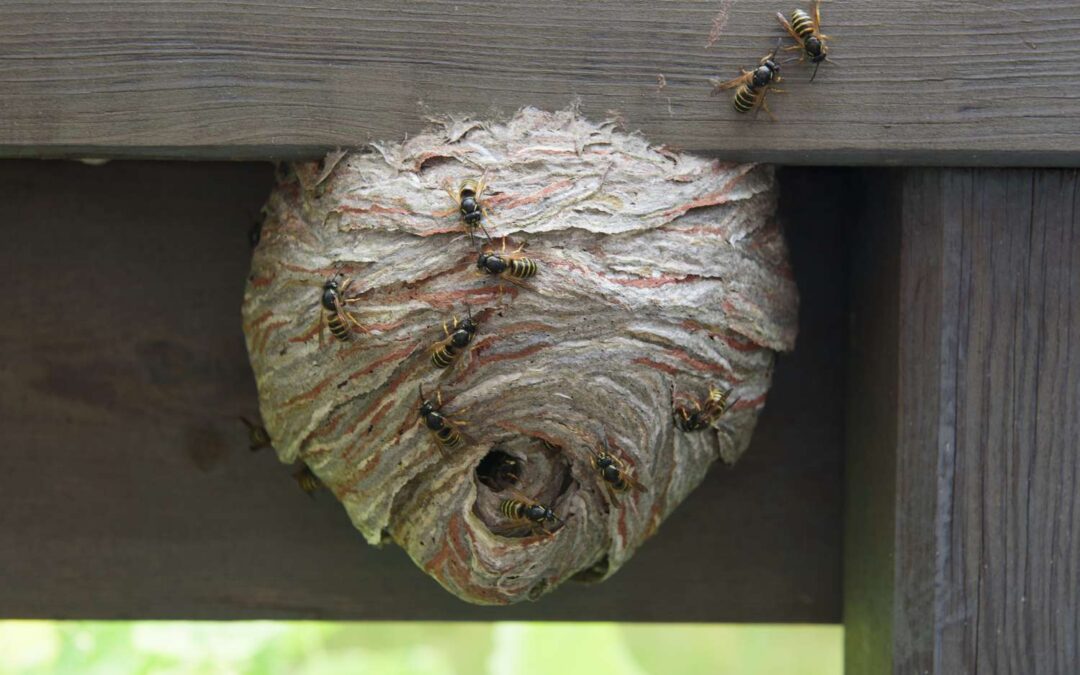
Wasps play an important role in nature by helping control other insect populations and pollinating some plants. However, when they decide to build a nest near your front door, deck, garage, or roofline, they quickly become more than an inconvenience. A single nest can grow from a lone queen in spring into a colony of hundreds or even thousands of wasps by late summer.
The good news is that preventing a nest is much easier, safer, and less expensive than dealing with a large, established colony. Understanding what attracts wasps and taking a few preventive steps early in the season can greatly reduce the chances of unwanted visitors settling around your home.
If you’re wondering how to prevent wasp nests, the key is to make your property less attractive before queens begin searching for nesting locations.
Why Do Wasps Build Nests Around Homes?
Every spring, fertilized queen wasps emerge after spending the winter in protected locations. Their first priority is finding a safe place to start a new colony.
They typically look for locations that offer:
- Shelter from rain and wind
- Protection from predators
- Easy access to food and water
- Quiet areas with little disturbance
That is why homes provide so many attractive nesting opportunities. Roof overhangs, sheds, decks, attics, fences, wall cavities, and even children’s play structures can all become ideal nesting sites.
Once a queen begins building, removing a tiny starter nest is much easier than dealing with a mature colony several months later.
When Should You Start Wasp Prevention?
One of the most common questions homeowners ask is:
What time of year should you prevent wasp nests?
Spring is by far the best time.
Queens usually begin searching for nesting locations shortly after temperatures consistently warm up. During this stage, colonies contain only a single queen or just a handful of developing workers.
By mid to late summer, nests can become dramatically larger and much more difficult to manage.
A simple seasonal routine can make a noticeable difference:
- Inspect your property in early spring.
- Remove potential nesting sites.
- Seal entry points around the home.
- Continue checking high-risk areas every few weeks.
Starting early is one of the most effective forms of wasp prevention, as it reduces the chance that a colony becomes established in the first place.
What Attracts Wasps to Your Property?
Many homeowners accidentally create ideal conditions without realizing it.
Wasps are attracted to three main things:
- Food
- Water
- Shelter
Sugary drinks left outside, overflowing garbage bins, fallen fruit, uncovered compost, pet food, and outdoor cooking residue all provide easy meals.
Even small water sources such as bird baths, clogged gutters, leaking hoses, or decorative fountains can encourage wasps to stay nearby during hot weather.
Sheltered structures complete the picture. Roof eaves, decks, sheds, pergolas, attics, and wall voids provide excellent places to begin building a nest.
Reducing these attractants is one of the easiest ways to learn how to prevent wasps from building a nest around your home.
How Can You Stop Wasps From Building a Nest?
The best approach is to combine several preventive habits instead of relying on a single trick.
Keep outdoor food sources under control
Food is often what keeps wasps returning to your yard.
After eating outdoors, wipe down tables, clean barbecue grills, and remove leftover food promptly. Keep garbage bins tightly closed and rinse recyclable beverage containers before placing them outside.
If you have fruit trees, collect fallen fruit regularly before it begins fermenting.
These small habits reduce the scents that attract foraging worker wasps.
Do Certain Landscaping Choices Help Prevent Wasps?
A tidy yard gives wasps fewer protected areas to settle.
Trim shrubs away from exterior walls, remove dead tree branches, and keep vines from growing against the house. Dense vegetation often hides developing nests until they become much larger.
Some homeowners also plant strongly scented herbs such as mint, basil, or citronella nearby. While these plants alone will not eliminate wasps, they may contribute to a broader prevention strategy when combined with proper property maintenance.
We at We Clean Pest Control often emphasize that long-term prevention starts with reducing the conditions that attract pests, rather than relying only on treatments.
How Often Should You Check for New Wasp Nests?
Regular inspections can prevent a small problem from becoming a major one.
During spring and early summer, spend a few minutes every couple of weeks checking common nesting locations around your property. Early nests are often no larger than a golf ball and may only contain the queen.
Pay special attention to:
- Roof eaves and soffits
- Porch ceilings
- Deck railings and underneath decks
- Sheds and detached garages
- Fences and gates
- Outdoor light fixtures
- Play structures and gazebos
Finding a nest early is one of the simplest ways to reduce the likelihood of a large colony developing later in the season.
What Should You Do if You Find a Small Wasp Nest?
This is another question that frequently appears in search results.
The answer depends on the size, location, and activity around the nest.
If you notice frequent wasp activity around entrances, children’s play areas, patios, or locations that are difficult to reach safely, it is best not to disturb the nest yourself. Even relatively small colonies can become defensive when threatened.
Many homeowners underestimate how quickly wasps respond to vibration or movement near the nest. A seemingly minor mistake can result in multiple stings within seconds.
If the nest continues growing or is located inside a wall, roof cavity, or another enclosed space, contacting a qualified wasp exterminator is usually the safest option. Professional identification is also important because different wasp species may require different treatment approaches.
Why Prevention Matters More Than Removal
By the time homeowners notice constant wasp activity, the colony has often been growing for several months.
A mature nest contains significantly more workers than a newly started one, making removal more challenging and increasing the likelihood of defensive behaviour.
Preventive maintenance offers several advantages:
- Fewer opportunities for queens to establish colonies.
- Lower risk of painful stings around your home.
- Reduced chance of nests developing inside walls or roof spaces.
- Less disruption during outdoor activities throughout summer.
In many cases, spending a little time inspecting your property in spring can prevent much larger problems later in the season.
For homeowners in Edmonton and surrounding communities, this proactive approach is especially valuable because wasp activity typically increases rapidly during the warmer months.
Frequently Asked Questions
What keeps wasps from building nests?
The best approach combines several methods rather than relying on one product. Remove food sources, keep garbage sealed, eliminate standing water, trim vegetation, seal entry points, and inspect your property regularly throughout spring and summer.
What smells do wasps dislike?
Peppermint, clove, eucalyptus, citronella, and lemongrass are commonly mentioned as scents that may discourage wasps. While these natural repellents can help, they are most effective when used alongside proper property maintenance.
Where do wasps usually build nests around a house?
Common locations include roof eaves, soffits, attics, sheds, decks, fences, wall cavities, garages, outdoor furniture, and children’s play structures. These areas provide shelter from weather and predators.
Is it better to remove a wasp nest yourself?
Small starter nests that are inactive may sometimes be removed safely, but active nests, especially those in difficult-to-reach locations or containing large colonies, should generally be left to professionals. Attempting removal without proper equipment can increase the risk of multiple stings.
Stay Ahead of Wasp Season
The most effective approach is to stop nests before they become established. Regular inspections, good outdoor hygiene, and routine home maintenance can significantly reduce the chances of wasps settling near your living spaces.
If you discover an active nest or notice increasing wasp activity around your property, professional assessment is often the safest next step. At We Clean Pest Control, we believe in providing honest advice first and recommending only the treatment that fits the situation. Whether the problem is a newly formed nest or a well-established colony, early action helps protect your family and prevents a small issue from becoming a much larger one.
