
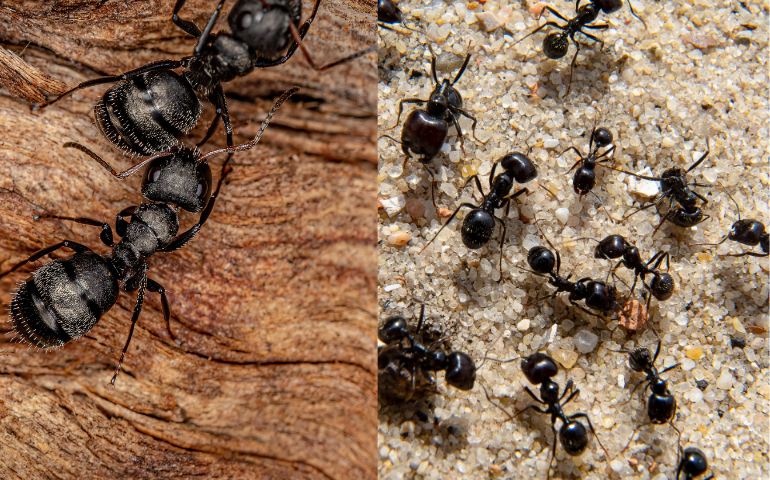
Finding ants inside your home can be frustrating, but not all ants pose the same level of risk. One of the most common questions homeowners ask is whether they’re looking at harmless black ants or carpenter ants that could damage their property.
At first glance, the two can appear almost identical. Both are dark-colored, both can invade kitchens and living spaces, and both often become more noticeable during the warmer months. However, understanding the difference between carpenter ants vs black ants is important because the next steps you should take depend entirely on which species you’re dealing with.
This guide explains how to identify each type of ant, where they nest, the warning signs to watch for, and when an infestation deserves immediate attention.
What Is the Difference Between Carpenter Ants and Black Ants?
The biggest difference is what they do after they enter your home.
Common black ants are mainly nuisance pests. They come indoors looking for food and water, but they do not damage wooden structures.
Carpenter ants are different. Instead of eating wood like termites, they excavate it to create smooth tunnels for their nests. Over time, a large colony can weaken wood that has already been softened by moisture or decay.
If you’re comparing black ants vs carpenter ants, look beyond their color. Their size, nesting habits, and the evidence they leave behind are much more reliable ways to identify them.
| Feature | Carpenter Ants | Common Black Ants |
| Typical size | 6–13 mm | 3–5 mm |
| Color | Black, dark brown, or reddish-black | Usually solid black |
| Nest location | Damp or damaged wood | Soil, gardens, under rocks, sidewalks |
| Damage to wood | Yes | No |
| Leave sawdust-like material | Yes | No |
| Main reason for entering homes | Nesting and food | Food and water |
Although size is often the quickest clue, it should never be the only one you rely on.
How Can You Tell if an Ant Is a Carpenter Ant?
Many homeowners immediately notice that carpenter ants simply look “bigger.” That’s because they often are.
When comparing carpenter ant vs black ant size, worker carpenter ants vary considerably within the same colony. Smaller workers may be around 6 mm long, while larger workers can exceed 12 mm. By comparison, common black ants usually stay around 3 to 5 mm.
Size alone isn’t enough, though. Look for several identifying features together:
- Carpenter ants have a smooth, evenly rounded thorax when viewed from the side.
- Black ants often have a more uneven or slightly indented body profile.
- Carpenter ants usually have a larger head in proportion to their body.
- Their antennae are bent, and they have a narrow waist like other ants.
- Winged carpenter ants are significantly larger than flying black ants during swarming season.
Another helpful clue is how many ants you see. Spotting a single large carpenter ant indoors occasionally may not indicate a major infestation. Seeing them regularly, especially at night, often suggests a nearby nest.
What Are the Signs of a Carpenter Ant Infestation?
Early identification can help prevent much larger problems later.
Some of the most common warning signs include:
- Large ants appearing indoors, especially after sunset.
- Small piles of wood shavings collecting beneath walls, windows, or wooden beams.
- Soft or hollow-sounding wood when tapped.
- Rustling noises inside walls during quiet evenings, caused by ants moving through galleries.
- Winged ants indoors during spring or early summer, indicating that a mature colony may be nearby.
Unlike black ants, carpenter ants usually do not form obvious trails across kitchen counters throughout the day. Instead, they often travel individually or in smaller numbers between their nest and food sources.
If you consistently notice large ants in multiple areas of your home, it is worth investigating further before the colony expands.
Why Moisture Problems Often Lead to Carpenter Ants
One common misconception is that carpenter ants attack perfectly healthy wood.
In reality, they usually prefer wood that has already been softened by moisture. Roof leaks, plumbing leaks, poor ventilation, or water damage create ideal conditions for excavation.
That means the ants are often a symptom of another issue that also deserves attention.
Fixing the moisture source is just as important as eliminating the colony. Otherwise, even after treatment, another colony may eventually move into the same favorable conditions.
This is one reason residential pest control often involves more than simply removing visible insects. Identifying why pests are attracted to a property helps reduce the chance of future infestations.
How Do You Get Rid of Carpenter Ants?
Unlike common black ants, carpenter ants cannot always be eliminated by treating the ants you see.
The real challenge is finding and removing the colony.
For small outdoor activity, reducing moisture, trimming vegetation, and removing damaged wood may be enough to discourage nesting. Indoor infestations, however, are often much more difficult because the nest may be hidden deep inside walls, ceilings, or structural framing.
Professionals typically begin by confirming the species before recommending treatment. This avoids unnecessary pesticide use and ensures the correct approach is taken.
At We Clean Pest Control, we believe identification comes before treatment. Confirming whether you’re dealing with carpenter ants or another species helps ensure you receive the right solution instead of paying for a service you may not need.
When Should You Call a Professional?
Not every ant sighting requires immediate action. However, some situations deserve closer attention.
You should consider a professional inspection if:
- You regularly see large ants indoors.
- You notice piles of wood shavings beneath walls or window frames.
- You hear faint rustling sounds inside walls.
- Winged ants appear indoors during spring or summer.
- The infestation continues despite DIY treatments.
These signs often indicate that the colony is established somewhere inside or around the structure.
If you’re unsure whether you’ve found carpenter ants, an experienced ants exterminator in Edmonton can identify the species and determine whether structural damage is a concern before recommending treatment.
Carpenter Ants vs Black Ants: Know the Difference Before the Problem Grows
At first glance, carpenter ants and common black ants can look nearly identical. However, understanding the difference can save homeowners from unnecessary worry, or help them catch a serious infestation before costly damage occurs.
When comparing carpenter ants vs black ants, remember that size is only part of the story. Carpenter ants typically nest in damp or damaged wood, leave behind sawdust-like debris, and have the potential to weaken wooden structures over time. Common black ants, while certainly annoying, are usually searching for food and do not damage your home’s framing.
If you continue seeing large ants indoors or notice signs that point to a hidden nest, it is worth having the situation assessed. At We Clean Pest Control, we help Edmonton homeowners identify the real source of an infestation and recommend the most effective solution based on the pest, not assumptions.
