
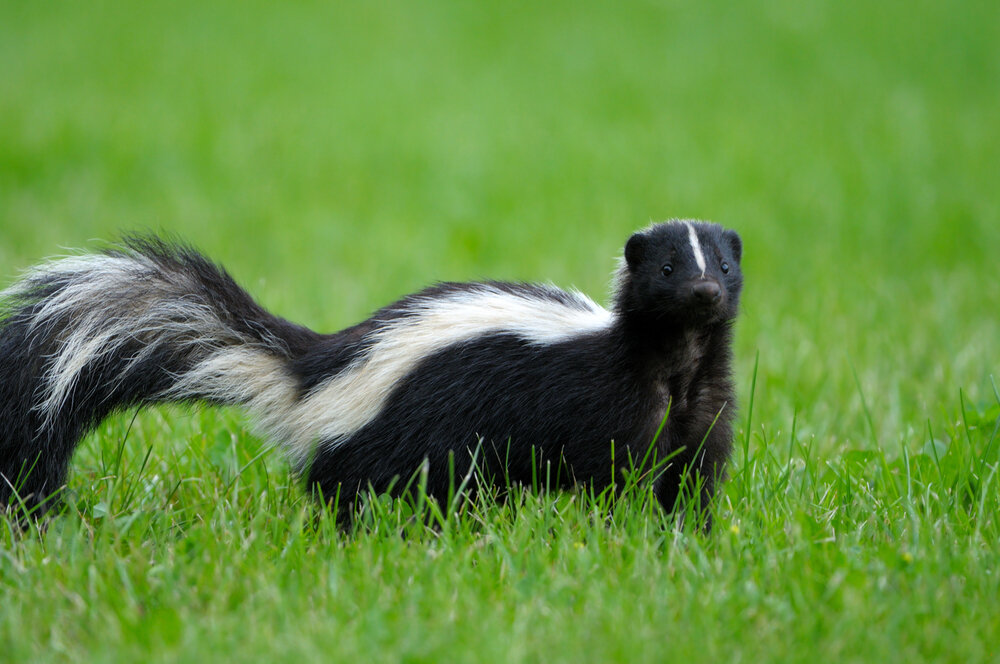
A skunk wandering through your yard might seem harmless at first. Then comes the digging, the smell, or worse, a surprise spray near your home, pets, or garage. For homeowners in Alberta, skunks are one of the most frustrating wildlife problems to deal with because they are persistent, defensive, and surprisingly comfortable living close to people.
If you have been asking yourself how do i get rid of skunk problems around your property, the answer depends on understanding why they are there in the first place. Skunks rarely stay without a reason. Food, shelter, and easy access are what attract them.
The good news is that skunk issues can usually be controlled safely and effectively when handled early.
Why Skunks Keep Coming Onto Your Property
Skunks are common throughout Calgary and Edmonton, especially in residential neighborhoods with gardens, sheds, decks, and accessible garbage bins. They are nocturnal animals, which means most activity happens after dark.
What attracts them most often?
- Open garbage or compost bins
- Pet food left outside overnight
- Grubs and insects in lawns
- Gaps under decks, porches, or sheds
- Wood piles and cluttered storage areas
- Easy water sources like bird baths or leaking hoses
Many homeowners searching how to get rid of skunks discover the real issue is not the skunk itself. It is the environment making the property attractive to them.
A skunk that finds food and shelter usually comes back repeatedly.
Signs You Have a Skunk Problem
Sometimes you never actually see the skunk. Instead, you notice the damage first.
Common signs include:
- A strong sulfur-like odor around the property
- Small cone-shaped holes dug into lawns
- Garbage knocked over during the night
- Scratching sounds under decks or sheds
- Tracks or droppings near crawl spaces
- Pets acting aggressively toward certain areas outside
Skunks are generally not aggressive unless cornered. However, they can spray up to several meters away when frightened. That spray is extremely difficult to remove from clothing, pets, walls, and outdoor furniture.
That is usually when homeowners begin urgently searching how get rid of skunk smell after an unfortunate encounter.
The Biggest Mistake Homeowners Make
One of the most common mistakes is trying to scare skunks away without removing what attracted them.
Motion lights, loud noises, or homemade repellents may work temporarily. But if food and shelter remain available, the skunk often returns within days.
Another mistake is sealing off openings too early. If a skunk is nesting underneath a structure and the entrance gets blocked while the animal is still inside, the situation can quickly get worse.
Baby skunks are also common during spring and early summer. Disturbing a nesting area without proper inspection can create serious odor and sanitation problems later.
How To Get Rid of Skunks Safely
The safest and most effective approach focuses on prevention first, then removal if needed.
1. Remove Food Sources
Skunks stay where food is easy to find. Start by eliminating attractants around your property.
Secure garbage bins with tight-fitting lids. Avoid leaving pet food outdoors overnight. Clean fallen fruit from trees and keep compost bins sealed properly.
If your lawn has grub problems, treating the insects may reduce skunk digging activity significantly.
2. Eliminate Shelter Areas
Skunks love dark, quiet hiding spots.
Inspect areas under:
- Decks
- Sheds
- Porches
- Staircases
- Crawl spaces
If no skunk is currently inside, seal openings with heavy mesh or proper barriers. This prevents future nesting.
Do not use loose fencing or lightweight materials. Skunks can dig underneath surprisingly easily.
3. Use Humane Trapping Carefully
Humane trapping can work, but it requires caution and knowledge of local wildlife regulations.
Skunks rely heavily on smell, so bait placement matters. However, approaching or relocating a trapped skunk incorrectly increases the risk of spraying.
This is also where many DIY attempts fail. People searching how do i get rid of skunk problems often underestimate how defensive skunks become when trapped.
In Alberta, wildlife relocation rules may also apply depending on the area and species involved.
4. Address Entry Points Immediately
Once skunks leave, the area should be secured quickly. Otherwise, another animal often replaces them.
Professional wildlife inspections are useful for identifying hidden gaps around foundations, vents, utility lines, and fences that homeowners may overlook.
How To Get Rid of Skunk Smell
Unfortunately, skunk spray is not like ordinary odor. The sulfur compounds cling to surfaces, fabrics, and fur.
If you are searching how get rid of skunk smell, acting fast makes a huge difference.
For pets, avoid simply rinsing with water first. Water alone can spread the oils further into the fur.
A common odor-neutralizing mixture includes:
- Hydrogen peroxide
- Baking soda
- Dish soap
This solution helps break down the odor compounds instead of just masking them.
For outdoor areas, ventilation and surface cleaning are important. Hard surfaces may need multiple washes, especially in warmer weather when odors linger longer.
Inside homes, HVAC systems can sometimes spread skunk odor throughout the building if spray enters vents or crawl spaces.
Why Skunks Are More Than Just a Smell Problem
Many people think skunks are mainly a nuisance because of odor. But they can also create property and health concerns.
Skunks may carry parasites and diseases, including rabies in rare cases. Pets that interact with skunks may require veterinary attention even without visible bites.
Digging can also damage lawns and gardens extensively over time.
For multi-unit properties or rental homes, one skunk problem can quickly affect neighboring units if nesting areas are shared beneath structures.
This is one reason property managers often contact a professional skunk exterminator in Edmonton before the issue spreads further.
Seasonal Skunk Activity in Alberta
Skunk problems tend to increase during certain times of year.
Spring
This is nesting season. Female skunks look for protected denning spots to raise babies.
Summer
Food sources increase, especially insects and accessible garbage.
Fall
Skunks search for warm shelter before colder temperatures arrive.
Winter
Activity slows, but skunks may still remain under heated structures or crawl spaces.
Understanding these seasonal patterns helps homeowners respond earlier instead of waiting for a stronger infestation.
When Professional Help Makes Sense
Some wildlife issues can be handled independently. Others are best left to trained technicians.
You should strongly consider professional help if:
- A skunk is living under your home or deck
- There are baby skunks present
- The animal sprayed indoors
- DIY trapping has failed
- Pets or children are at risk
- The odor persists despite cleaning
Companies like We Clean Pest Control focus on practical solutions without unnecessary treatments or complicated preparation. In many cases, faster intervention prevents much larger problems later.
Professional inspections can also identify hidden wildlife access points most homeowners miss.
Long-Term Prevention Tips
Keeping skunks away is usually easier than removing them once established.
Here are some long-term prevention strategies:
- Keep lawns healthy and reduce grub activity
- Store garbage securely
- Remove outdoor food sources at night
- Seal foundation gaps and crawl spaces
- Trim dense vegetation near structures
- Avoid leaving wood piles directly against buildings
Small maintenance habits often make the biggest difference over time.
Frequently Asked Questions
How do I know if a skunk is living under my deck?
You may notice strong odors, digging near edges, tracks, or nighttime scratching sounds. Skunks prefer dark, protected spaces close to food and water sources.
How do i get rid of skunk activity without trapping?
Removing food sources and sealing shelter areas often encourages skunks to leave naturally. However, this only works if the animal is not already nesting underneath a structure.
How long does skunk smell last?
Outdoors, the smell may linger for days or even weeks depending on weather conditions. Indoors or on pets, untreated odor can remain much longer.
Are skunks dangerous to pets?
They can be. Beyond spraying, skunks may carry parasites or diseases. Pets should avoid direct contact whenever possible.
Skunk Removal Has Never Been Easier
Skunks are stubborn animals, but they are also predictable. They stay where food, shelter, and safety are easy to find.
If you are trying to figure out how to get rid of skunks, focus first on what is attracting them to your property. Fast action usually prevents bigger infestations, stronger odors, and more expensive repairs later.
For Calgary and Edmonton homeowners, the key is combining prevention, proper exclusion, and safe removal methods before the problem escalates.
